
Last updated November 18, 2026
 Hardwood
 Engineered hardwood
 Luxury vinyl plank
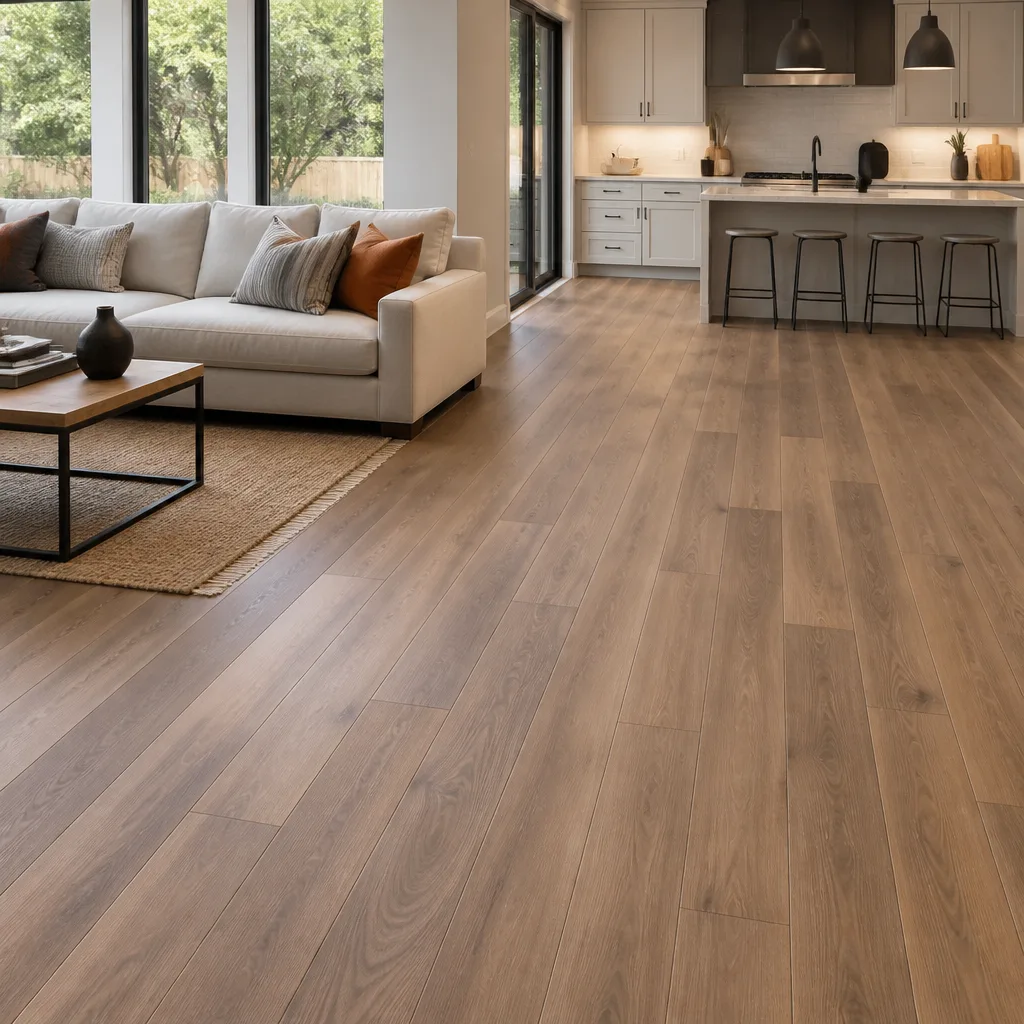 Laminate
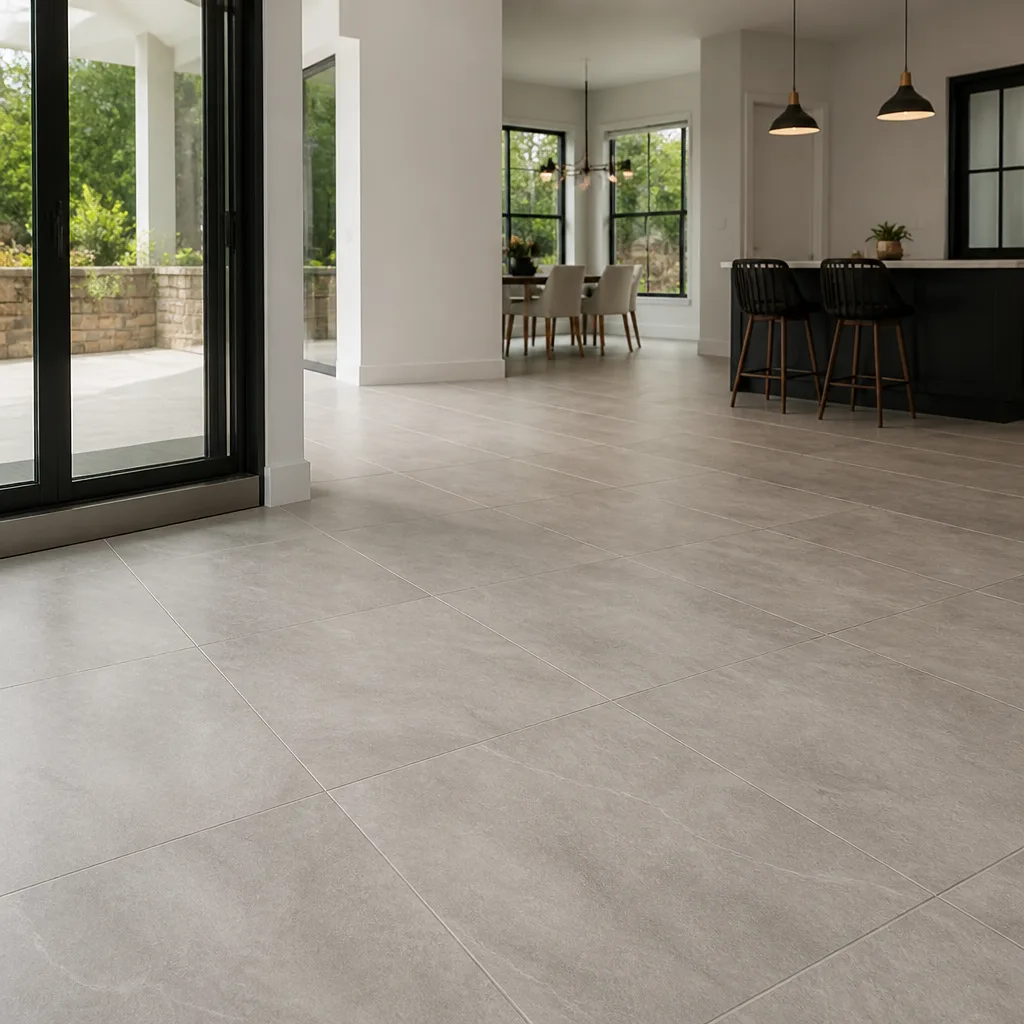 Porcelain tile
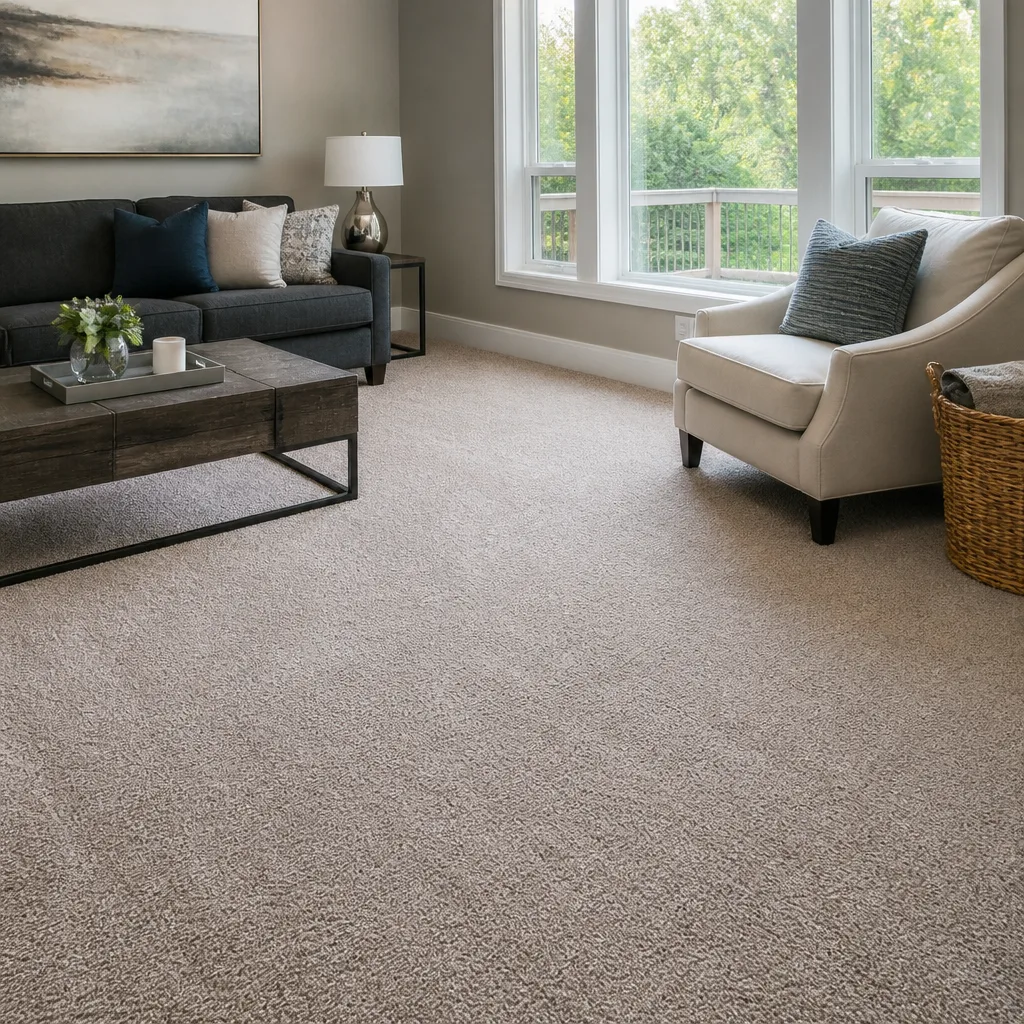 Carpet
 Shaw
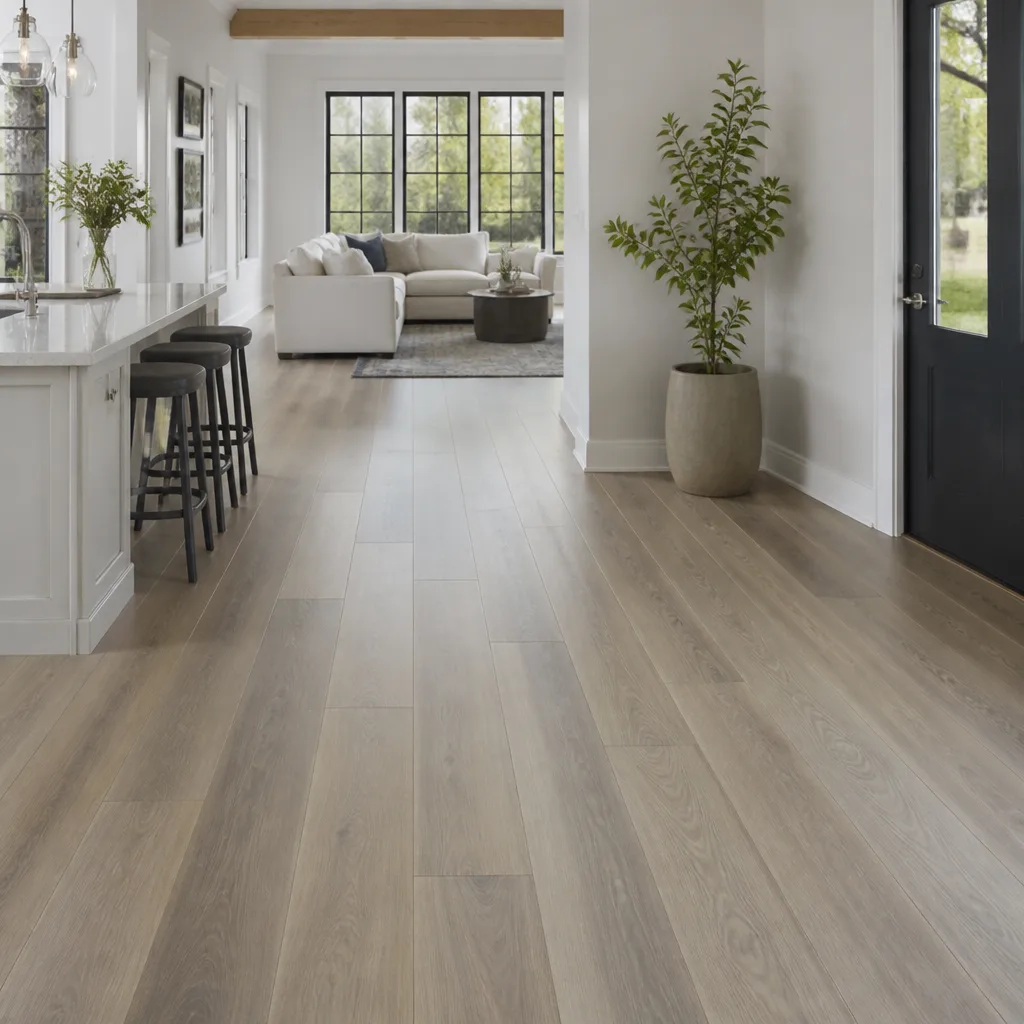 Mohawk
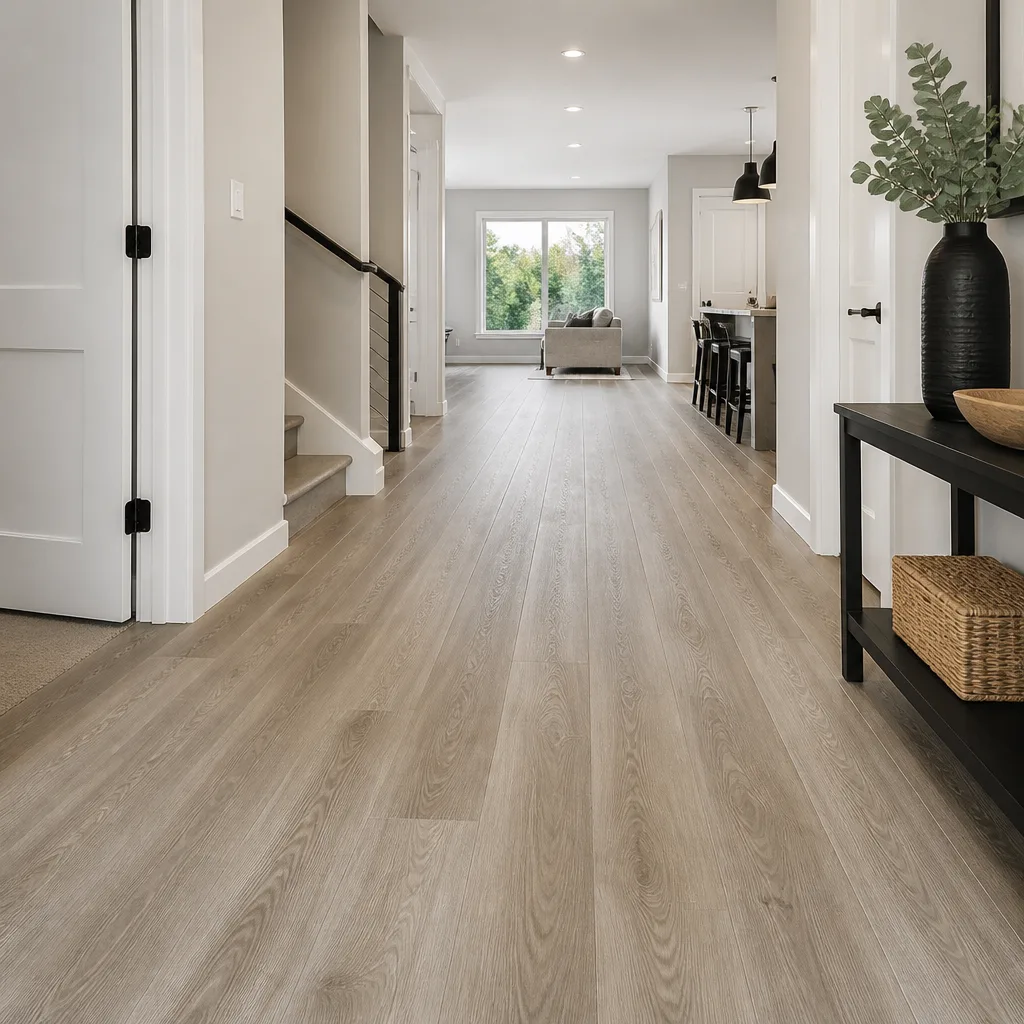 COREtec
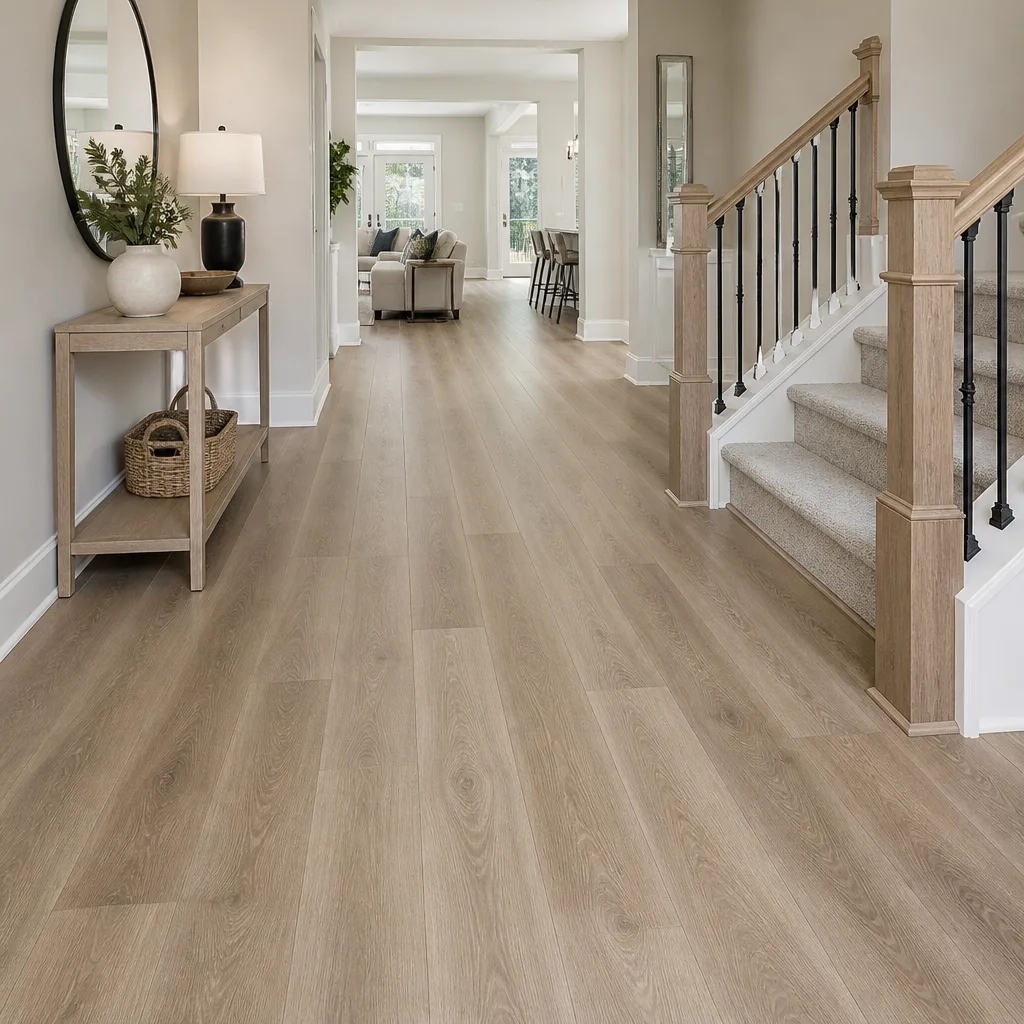 Pergo
Free in-home measure and written estimate: Shaw, Mohawk, COREtec and Pergo lines compared on your own rooms, with carpet, tile, vinyl plank, laminate and hardwood laid out side by side
Get your free estimateHow Henderson’s Climate Can Affect Your Flooring Choice
Most flooring advice you’ll read online assumes a climate roughly like the one the writer lives in. That’s a problem, because Henderson isn’t one climate. It’s two, and they pull in opposite directions. Winter here is desert-dry, and then monsoon season rolls through and the air gets humid in a way that surprises people who moved here expecting permanent dryness. Your floor lives through both every single year, expanding and contracting, taking on moisture and then giving it back. This guide walks through what that swing actually does to wood, laminate, tile, carpet and resilient plank, which materials handle it and which quietly fail, and what to look for when you’re choosing a floor for a home in Henderson.
Quick Answer
The best flooring for the Henderson climate is one that tolerates both a dry winter and a humid monsoon summer without cupping or gapping. In practice that means engineered hardwood, luxury vinyl plank, porcelain tile and quality carpet are your safest bets, while solid hardwood and low-grade laminate carry real risk. If you want the short version: pick for dimensional stability first, then style.
Styles & brands we work with
- Hardwood
- Engineered hardwood
- Luxury vinyl plank
- Laminate
- Porcelain tile
- Carpet
- Shaw
- Mohawk
- COREtec
- Pergo
Table of Contents
- Why Henderson’s Two-Season Humidity Swing Is Harder on Floors Than a Steady Climate
- What Your Indoor Humidity Actually Looks Like in a Henderson Home
- Ranking Flooring by Dimensional Stability
- Slab-on-Grade Construction and Subfloor Moisture in the Desert
- How Henderson’s HVAC Habits Create a Microclimate
- Which Brand Lines Handle the Swing and Which Are Mismarketed
- Matching the Floor to the Room in a Henderson Home
- A Step-by-Step Way to Evaluate a Floor Before You Buy
Why Henderson’s Two-Season Humidity Swing Is Harder on Floors Than a Steady Climate
A floor is happiest when the air around it stays roughly the same all year. Materials move with moisture, and a material that never has to move much stays flat and tight. Henderson doesn’t offer that stability. Winter air here runs dry, often down into the teens and low twenties in relative humidity indoors, and then the summer monsoon pushes outdoor humidity high enough that a house sealed up with the AC running still absorbs a noticeable amount of moisture through doors, windows and the slab. Your floor goes from a shrinking cycle to a swelling cycle and back again, every year.
That repeated cycle is what causes the failures homeowners actually complain about:
- Gapping in winter, when wood and laminate shrink and seams open up
- Cupping and crowning in summer, when the underside of a plank takes on more moisture than the face
- Edge lifting in laminate and some vinyl when the expansion gap wasn’t sized for the swing
- Gaps at baseboards, which look cosmetic but signal the floor is moving more than it should
- Buckling in extreme cases, usually where the floor was installed tight against a wall with no room to grow
A home in a consistently humid city like Seattle deals with one direction of stress. A home in a consistently dry city deals with the other. Henderson homes deal with both, and the annual reversal is what wears a floor out. That’s why a product marketed as “desert-safe” or “great for dry climates” tells you almost nothing about whether it survives here. It’s built for half of the year. We install carpet, tile and hardwood across Henderson, and the material choices that hold up long term are the ones engineered for movement, not the ones that look best on a spec sheet.
What Your Indoor Humidity Actually Looks Like in a Henderson Home
The outdoor humidity in Henderson swings from very low in winter to high during the monsoon months, but the number that matters for your floor is the indoor relative humidity, and that depends almost entirely on how you run the house. In our experience walking through homes here, a well-sealed house with central AC can sit in the high teens to low twenties in January, then climb past the mid-fifties during a monsoon stretch when the system is fighting outdoor moisture all day.
That’s a wider range than many coastal cities see indoors, and the reason is simple: coastal homes are usually humid year-round, so the floor gets one stable-ish environment. Henderson homes get two very different ones. Here’s the practical breakdown:
- Winter (dry season): indoor RH commonly in the teens to low twenties. Wood shrinks, seams open, and caulk or grout at the perimeter can crack.
- Monsoon season (typically July into September): outdoor moisture rises sharply, and indoor RH can push into the fifties and beyond when the house isn’t managing it. Wood and laminate swell, and plank edges can lift.
- Shoulder months: the transition periods are the sneaky ones. A floor doesn’t fail mid-winter or mid-summer, it fails during the rapid back-and-forth.
What this means in practice is that the climate outside your house sets the range, but your habits inside it set the actual number your floor sees. If you keep the house sealed and run the AC hard, you’re effectively creating a drier indoor environment than the outdoor reading would suggest. If you open windows during a monsoon week, you can flood the house with moisture in an afternoon. Neither is wrong, but the floor has to live with the result, and picking a material with real dimensional stability and a proper expansion allowance is how you give it room to move.
Ranking Flooring by Dimensional Stability
Dimensional stability is the single most useful filter for a Henderson floor, and it has nothing to do with whether a product is labeled “waterproof.” Stability is about how much a material expands and contracts when moisture changes. Here’s how the main categories rank, from most stable to least, along with why.
- Porcelain and ceramic tile. The most dimensionally stable floor you can put in a Henderson home. Tile barely moves with humidity, so it doesn’t care about the monsoon swing. The trade-off is that the subfloor and installation have to be right, and tile feels hard and cold underfoot.
- Luxury vinyl plank and tile. Very stable. The vinyl core is engineered to resist moisture movement, which is why LVP is the workhorse floor for so many Henderson homes. It handles both the dry stretch and the humid stretch without gapping the way wood does.
- Engineered hardwood. More stable than solid wood because the cross-layered plywood core resists movement. It still reacts to humidity, but far less dramatically, and it’s the closest thing to a real wood floor that tolerates this climate.
- Quality laminate. Modern laminate cores are stable, and a good brand handles the swing better than the old generation did. The weak point is the perimeter. If expansion gaps aren’t sized for both seasons, it lifts.
- Carpet. Not a dimensional issue in the way wood is, but moisture matters. Carpet over a slab can trap moisture and hold odor, so ventilation and subfloor condition matter more than the fiber itself.
- Solid hardwood. The least forgiving option here. Solid wood moves the most with humidity, and a wide-plank solid floor in a Henderson home with a big seasonal swing is the setup that most often cups or gaps. It can work in the right home with the right humidity control, but it’s not the safe default.
The word to be careful with is “waterproof.” A waterproof label tells you about spills and surface water. It tells you nothing about whether the floor stays flat through a monsoon season followed by a dry winter. A solid hardwood floor can be finished with a waterproof topcoat and still cup. A laminate floor can have a water-resistant core and still lift at the edges if it was installed tight. When you’re choosing for Henderson, ask about stability and expansion allowance, not just the moisture label. The right product matches the room, not the marketing tagline.
Slab-on-Grade Construction and Subfloor Moisture in the Desert
Most homes in Henderson are built on slab-on-grade, meaning the concrete floor sits directly on the ground with no crawl space or basement underneath. Homeowners often assume that in a desert, a slab must be bone dry. It isn’t, and the reason is worth understanding before you pick a floor.
Concrete is porous, and it pulls moisture up from the soil below through a process called wicking. Even in a dry climate, the ground under a slab holds some moisture, and that moisture migrates upward. When the summer monsoon arrives, the soil under and around the house takes on more water, and the slab can push more vapor into the home. Your floor is sitting on a surface that’s slowly breathing moisture, and that has real consequences:
- Natural wood and laminate are vulnerable to moisture coming up from below, because it attacks the underside of the plank and causes cupping.
- Concrete itself can hold moisture that shows up as discoloration, efflorescence, or a musty smell in carpet.
- Grout and thinset over a slab need the slab to be sound and reasonably dry before tile goes down, or the bond suffers.
- Moisture barriers matter under laminate, engineered wood and carpet, and a proper vapor barrier is not optional in a slab home.
What this means is that the subfloor is half the decision. A floor that’s stable in the box can still fail because the slab underneath wasn’t assessed. At an estimate visit, we check the slab for moisture and for cracks or high spots, because the surface the floor sits on determines how well it performs. Slab moisture is the part of a Henderson flooring project most homeowners never think about, and it’s the part that most often explains a floor that failed years earlier than expected. The written estimate should tell you what the subfloor needs before the new floor goes in, including whether any prep work is required. It’s also a reason to schedule the estimate as a proper visit, with a measure, rather than pricing the job from a photo.
How Henderson’s HVAC Habits Create a Microclimate
Henderson homes run their air conditioning for a large chunk of the year, and most stay shut up tight against the heat. That habit creates an indoor climate that’s actually drier than the outdoor humidity reading, and it changes how your floor behaves in ways a general climate chart won’t tell you.
Here’s the sequence. When the house is sealed and the AC is running, the system pulls moisture out of the air as it cools. During the dry months, that leaves indoor air very dry, and wood shrinks. During the monsoon months, the system is working harder against more outdoor moisture, and the indoor level rises even with the AC on. Meanwhile, on the days when the weather breaks and someone opens the windows, humidity jumps fast. A floor takes on that moisture over hours, not minutes, but the swing still happens.
The practical effect is a home that behaves like a much more extreme climate than Henderson’s outdoor average. Homeowners who move here from a humid city often assume they’re safe because it’s “dry,” and then their hardwood gaps in January. Homeowners from a dry city assume they’re safe because it’s hot, and then their floor cups after a monsoon. Both are reading the wrong number. What’s happening inside the house is what the floor responds to, and keeping the indoor humidity reasonably steady through the year is the single most effective thing you can do for any wood or laminate floor. The floor isn’t fighting the desert. It’s fighting the swing between the two seasons.
Tile and vinyl plank are far less sensitive to this, which is a big part of why they’re so popular in Henderson. They still want a proper installation, but they don’t care about the AC schedule the way a wood floor does. If you want wood in a sealed, hard-AC home, engineered is the safer route, and the estimate should factor in the room and the way the space is used.
Which Brand Lines Handle the Swing and Which Are Mismarketed
Brand matters less than construction, but some brand lines are better matched to a high-swing climate than others, and some are sold with marketing language that doesn’t fit Henderson at all. Here’s how to read it.
COREtec is the line we point to most often for high-traffic areas in this climate. Its rigid core construction is built for dimensional stability, which is exactly what a Henderson home needs. A product with a stable core and a proper expansion gap is doing the right thing for both the dry winter and the monsoon stretch. Mohawk is a broad portfolio, and the key is picking the right tier within it. Mohawk’s resilient and laminate lines are generally stable, but the budget end of any brand line is where the corners get cut, and a Henderson floor is not a great place to save on construction. LifeProof has a reputation for moisture resistance that makes it a sensible pick for slab homes and rooms that see occasional moisture, and Pergo is a name many homeowners already know for laminate. The important thing is not to buy on the name alone. Each of these lines has stable products and products better suited to a mild climate, and a “desert-safe” sticker on a box is not a warranty that the floor survives a monsoon.
We install and service nine recognized brands, including Shaw, Mohawk, COREtec, Pergo, LifeProof, Mannington, Armstrong, Daltile and Karndean. That range matters because it lets us be honest about fit rather than pushing whatever a single-brand dealer has on hand. If a customer loves a wide-plank solid hardwood look, we can talk about whether a Karndean or COREtec plank gets them the same visual with far less movement risk. If they want authentic stone-look tile, Daltile covers that end. The consultative part of the job is matching the product to the room and the house, not the other way around.
Two things we won’t do: we won’t call a floor waterproof when the real question is whether it stays flat, and we won’t promise a solid hardwood floor will never move in a Henderson home. It can work in the right house with the right humidity control, and it can also be the reason a homeowner is replacing a floor years earlier than expected. The honest answer is that it depends on the wood and the home, and the estimate visit is where that gets sorted out. What you can count on is the written estimate setting the price, whatever we recommend.
Matching the Floor to the Room in a Henderson Home
Once you understand the swing, the next step is applying it room by room. The same climate hits different rooms differently, and a floor that’s right for the living room may not be the right call for a bathroom. Here’s how we think about it in a Henderson home.
- Living and dining rooms: the highest-visibility spaces. Engineered hardwood or a good luxury vinyl plank gives you the look you want with real stability. These rooms are usually the most climate-controlled, which helps.
- Kitchens: moisture is a regular occurrence here. Luxury vinyl plank or tile are the practical picks, and a water-resistant plank handles the occasional spill better than wood.
- Bathrooms and laundry rooms: tile is the clear choice. It’s stable, it handles surface water, and it doesn’t care about the seasonal swing.
- Bedrooms: comfort matters, and carpet is a strong fit. Carpet doesn’t gap or cup, and a good carpet over a properly prepared slab is a solid long-term choice.
- Hallways and entry: the highest-traffic, most moisture-exposed part of the house. LVP or tile again, for durability and stability.
- Sunrooms and enclosed patios: the most extreme environment in the house. These rooms can swing harder than the rest of the home, and tile or vinyl is the safer bet than wood.
If you’re planning a whole-home project, this is where flooring installation in Henderson differs from buying room by room at a big-box store. You get one consistent plan across the whole house, one point of contact from product selection through installation, and no handoff between a sales rep and a subcontracted crew. That matters in a climate like this, because the decisions in one room affect how the whole house manages moisture.
A Step-by-Step Way to Evaluate a Floor Before You Buy
Here’s a practical sequence you can run through before you commit to a floor, whether you’re choosing from our brands or looking at a sample on your own.
- Identify the room and its moisture exposure. Is it a bathroom, a kitchen, a hallway, or a bedroom? The answer narrows the field before you look at any product.
- Ask about dimensional stability, not just the waterproof label. A waterproof finish doesn’t prevent cupping. Ask how the product handles humidity swings and what it’s made of.
- Have the slab assessed. In a slab-on-grade Henderson home, moisture coming up from below is a real factor. A proper visit checks it.
- Size the expansion gap for both seasons. The perimeter allowance has to account for the dry winter shrink and the monsoon swell. Too tight is worse than too loose.
- Match the brand line to the budget tier honestly. The cheapest product in a trusted brand line is usually the cheapest for a reason. Ask which tier fits your room and how it’s constructed.
- Get a written estimate before the install day. The written estimate sets the final price, and it should spell out the product, the prep, and the schedule.
When you work with a flooring specialist, this sequence is part of the estimate visit, not something you have to figure out alone. We install carpet, perform tile flooring installation, and lay hardwood, and we also refinish hardwood, which is a craft that most generalist contractors skip. Refinishing is worth raising early, because sometimes the right answer is to restore the floor you already have rather than replace it. If a solid hardwood floor is worn but structurally sound, sanding and refinishing can extend its life, and that’s a skill-intensive job that depends on the thickness of the wood and its condition, checked at the estimate.
Common Mistakes to Avoid
- Buying on the waterproof label alone. A waterproof finish doesn’t keep a floor flat through a monsoon. Ask about stability and construction, not just the tag on the box.
- Skipping the slab moisture check. In a slab-on-grade Henderson home, moisture from below is the failure mode homeowners miss. A floor laid on an unchecked slab can cup or lift within a couple of seasons.
- Installing solid hardwood without humidity control. Solid wood moves the most with the seasonal swing. If you want wood, engineered is the safer path unless the home’s humidity is managed carefully.
- Running the expansion gap too tight. Houses here are sealed and AC-heavy, and the floor needs room to grow in summer. A tight perimeter is a common cause of edge lifting.
- Choosing the cheapest tier in a brand line. A trusted brand name doesn’t guarantee every product in the line is right for this climate. The bottom tier is where construction gets thin.
- Ignoring the room’s job. A floor that’s right for a bedroom can be the wrong call for a bathroom. Match the material to the room before you match it to a style.
- Pricing the job from a photo instead of a visit. In a Henderson home, the subfloor and the room conditions change the plan. A proper estimate visit catches what a phone quote can’t.
See the difference
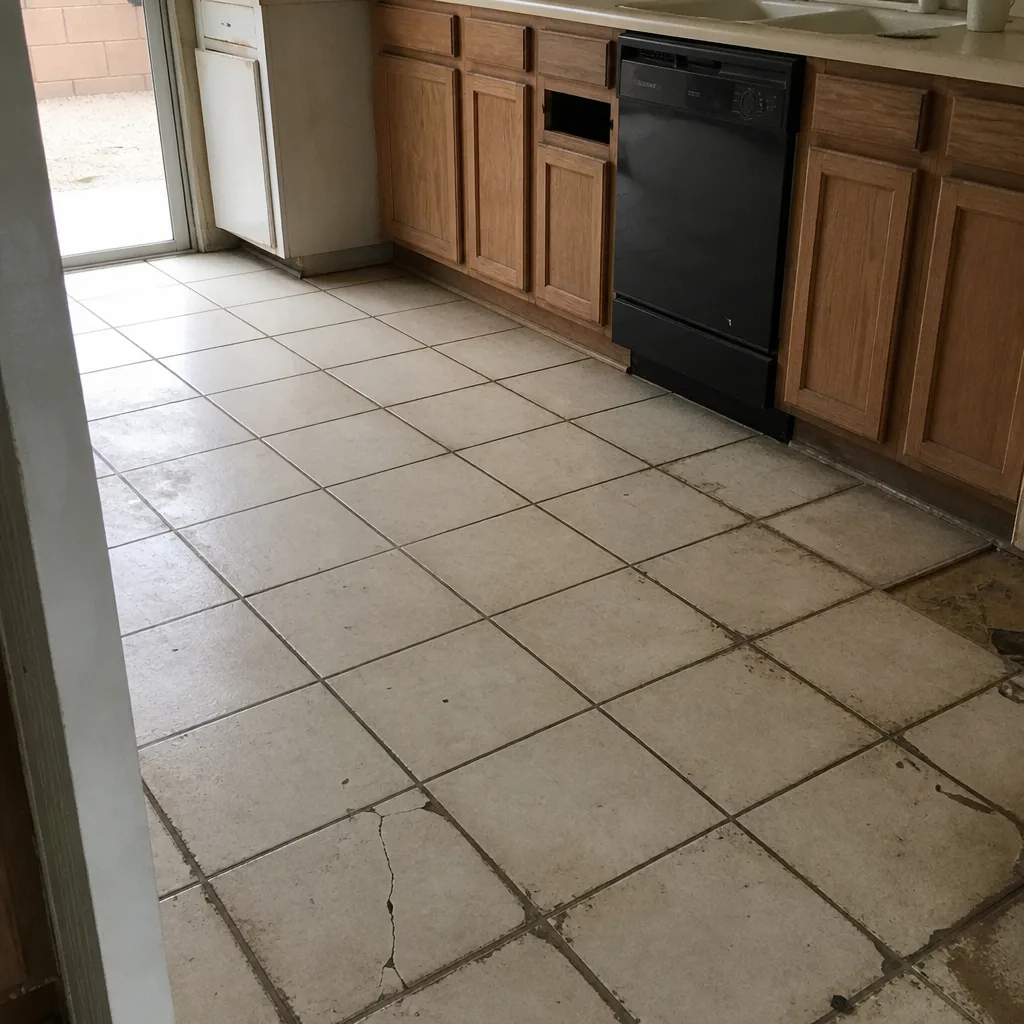 Before
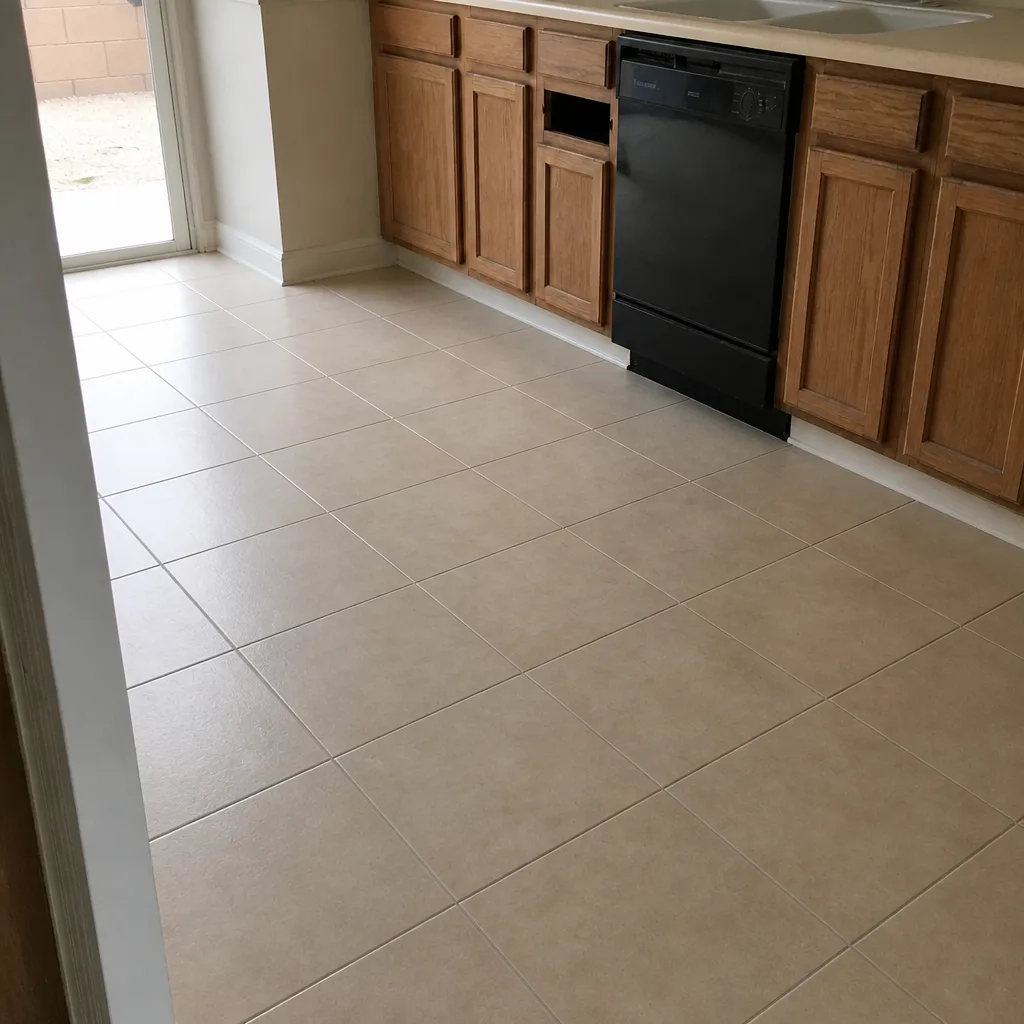 After
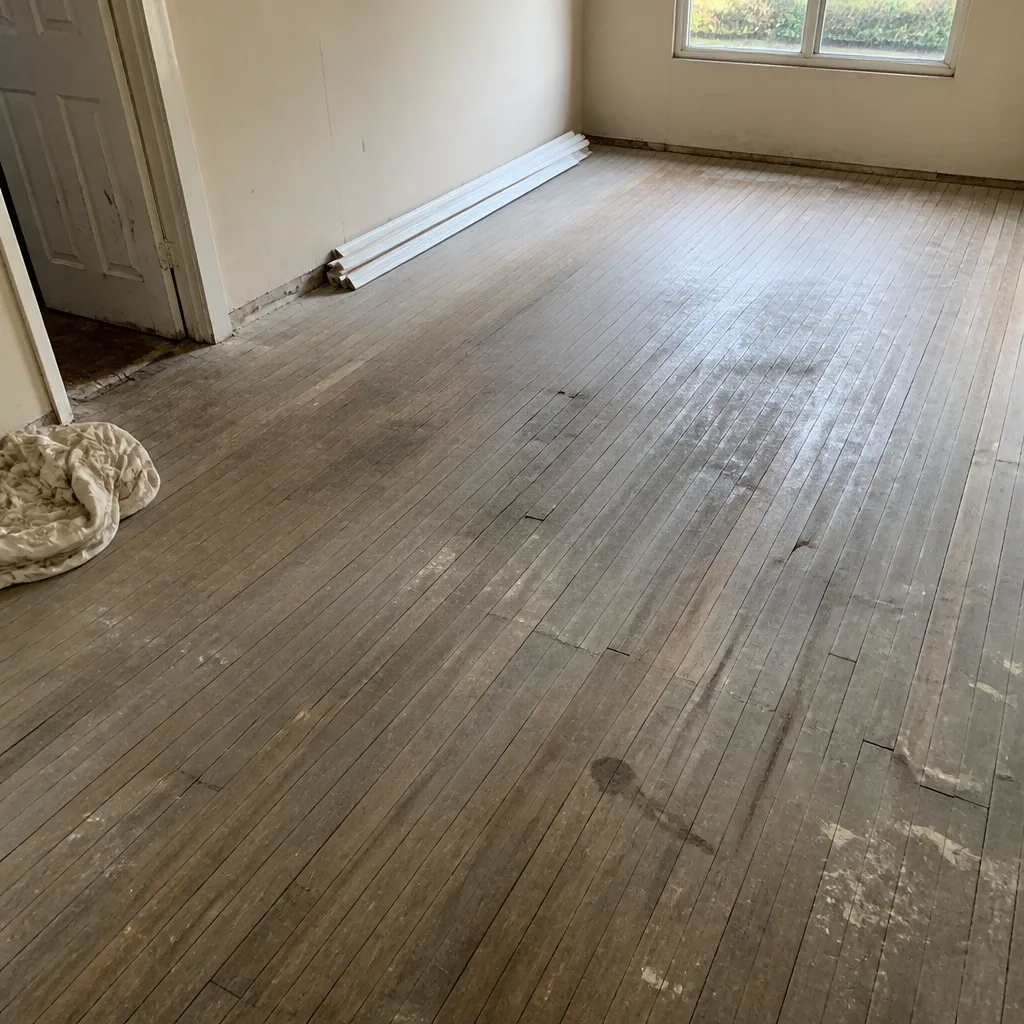 Before
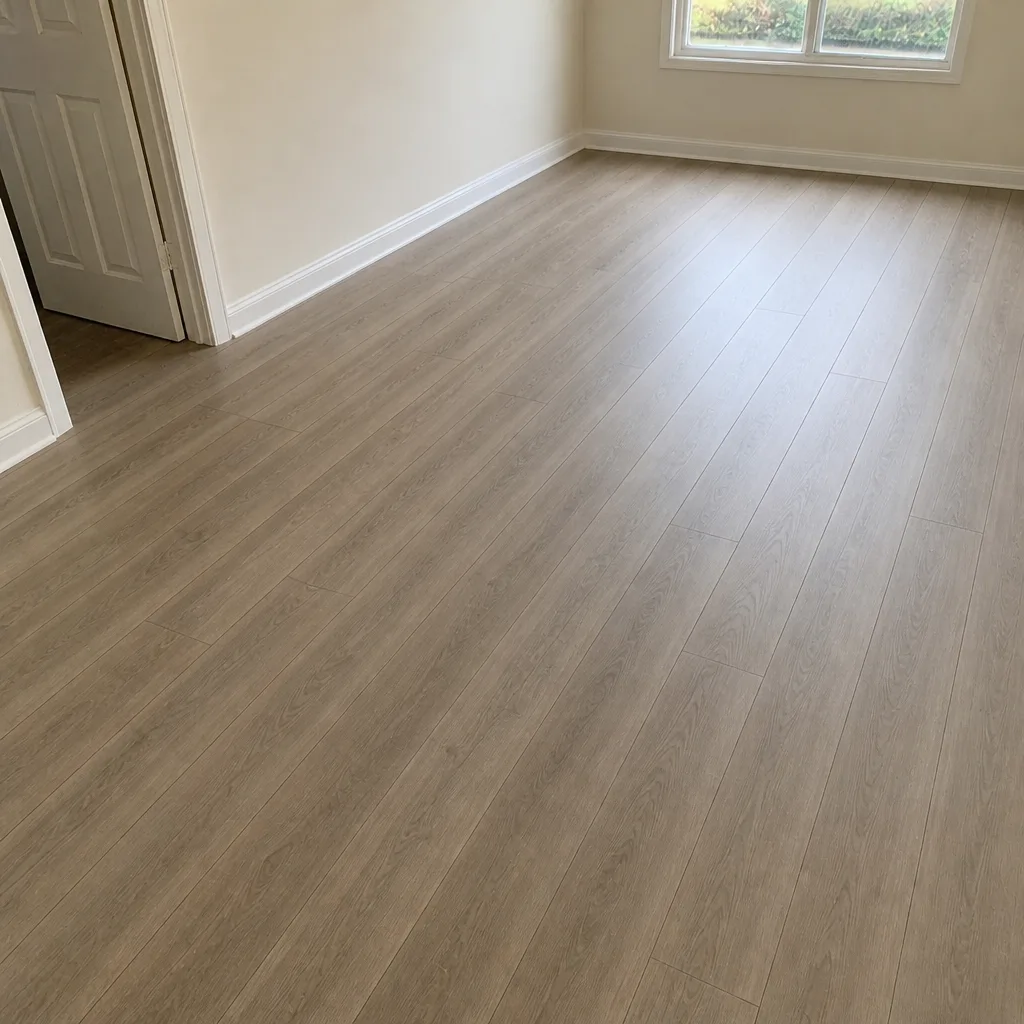 After
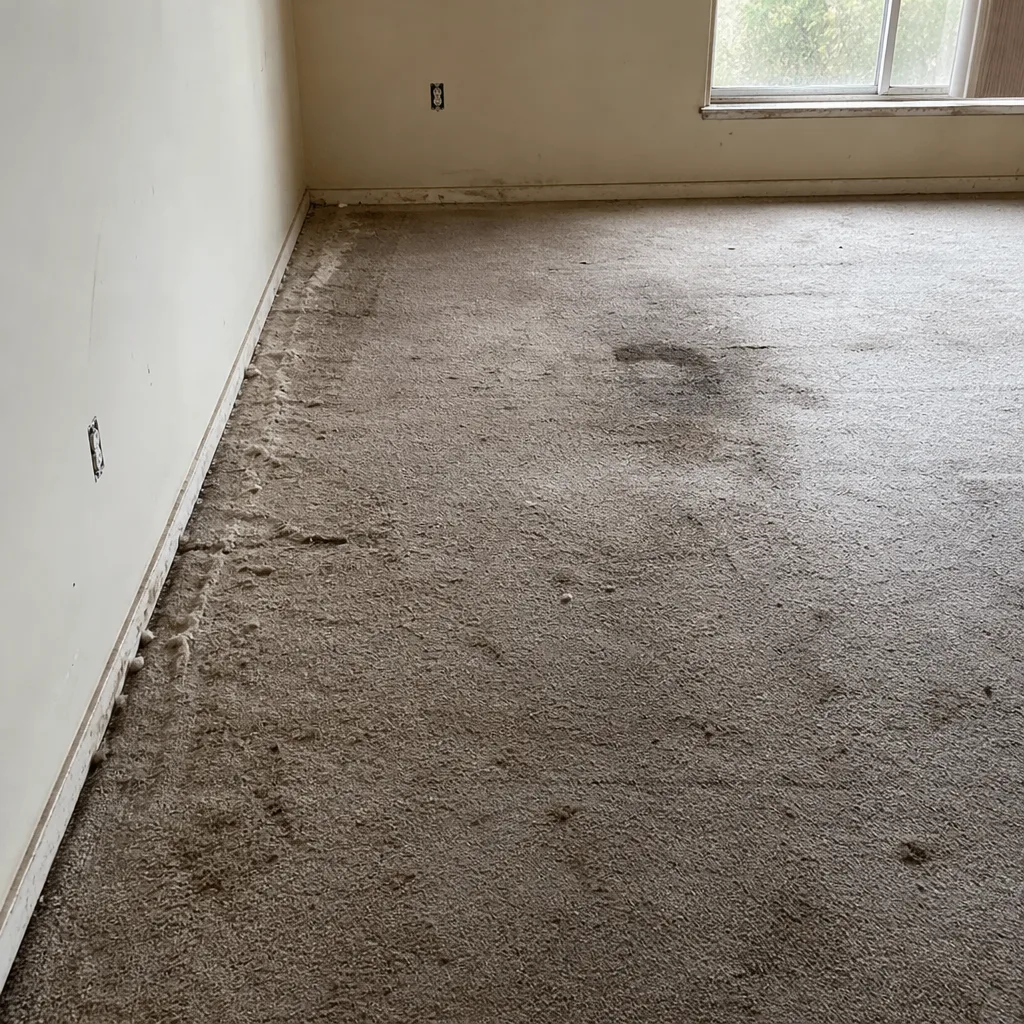 Before
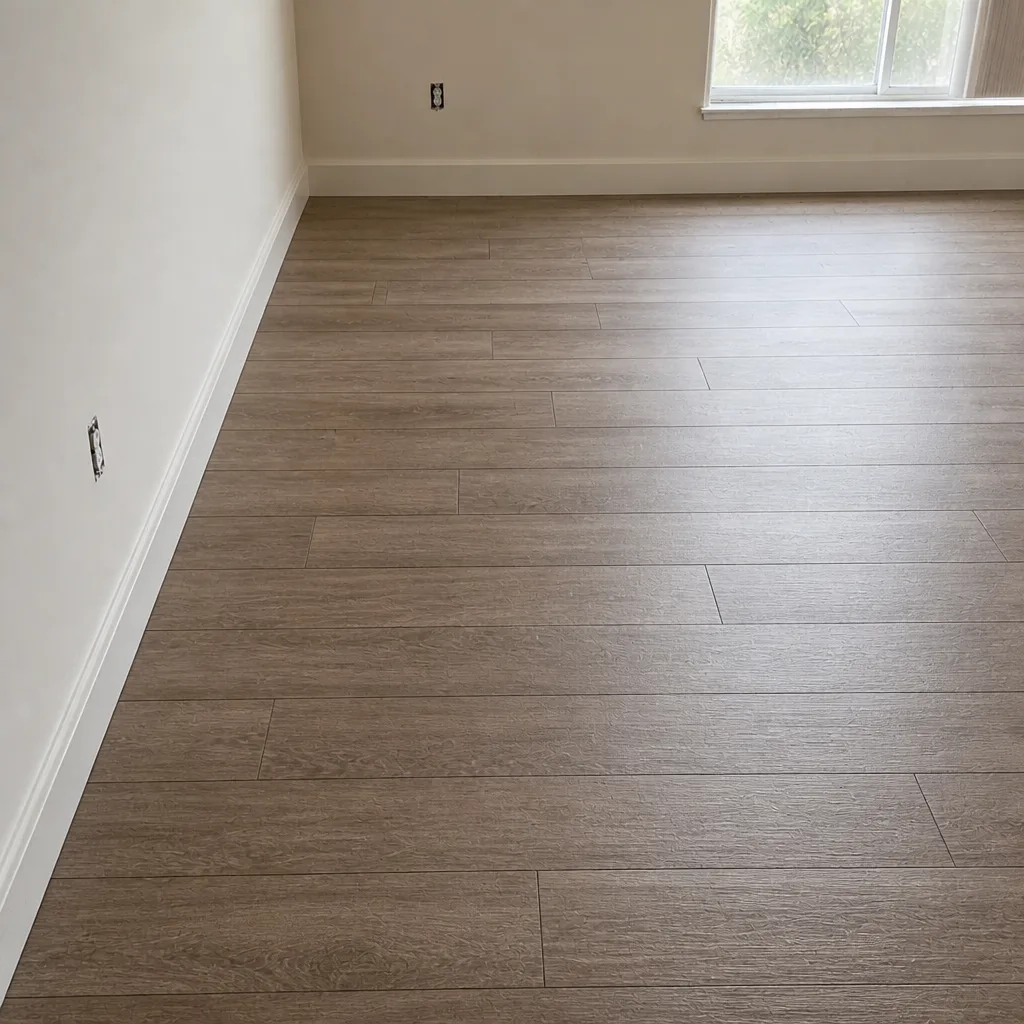 After
When to Call a Professional
Some flooring questions are best answered at a visit, and a few situations really do need one. If your hardwood is cupping or gapping and you’re not sure why, that’s a slab moisture or humidity issue that needs to be diagnosed before you spend money on a replacement. If you’re choosing between engineered wood and solid hardwood and the house runs the AC hard all summer, the decision depends on the room and the home. If you’ve bought a floor already and want to know whether it’ll work here, that’s worth checking before it goes down. And if the existing floor can be refinished instead of replaced, that’s worth a look before you tear it out.
Flooring Installation Henderson offers free estimates in Henderson, and the visit is the point where the written price gets set. Call (888) 721-9818 to schedule yours. We answer 24/7, with fast dispatch from 7am to 7pm, Sunday through Friday.
Frequently Asked Questions
Engineered hardwood, luxury vinyl plank, porcelain tile and quality carpet are the safest choices for a Henderson home, because they handle the wide seasonal humidity swing without cupping or gapping. Solid hardwood is the riskier option unless the home’s humidity is managed carefully. Call (888) 721-9818 for a free estimate and we’ll match the product to your rooms.
Hardwood cups and gaps in Henderson because the indoor humidity swings from very dry in winter to noticeably humid during monsoon season, and the wood expands and contracts with it. Gaps show up in the dry months and edge lifting or cupping shows up in the wet ones. If your floor is already doing this, call (888) 721-9818 and we’ll diagnose it at the estimate.
Not necessarily, but the construction matters more than the label. A quality laminate with a stable core handles the Henderson swing better than older laminate did, as long as the expansion gap is sized for both seasons. The cheapest laminate in a brand line is where it usually goes wrong. Call (888) 721-9818 and we’ll help you sort which tier fits your room.
Yes, slab-on-grade homes can have moisture coming up through the concrete even in a desert, which is why the slab needs to be checked before a new floor goes in. Wood and laminate are the most vulnerable to that moisture from below. The estimate visit is where we check it, so call (888) 721-9818 to schedule.
It can work, but it’s the least forgiving option in this climate and depends on the thickness of the wood, the home, and how the humidity is managed. Engineered hardwood is usually the safer path for the same look. Whether a floor can be refinished also depends on the wood’s condition, checked at the estimate. Call (888) 721-9818 for an honest read on your space.
Carpet holds up well in Henderson bedrooms and living areas, and it doesn’t gap or cup the way wood does. The key is a properly prepared subfloor and good ventilation so moisture under the carpet doesn’t become an issue. If you’re considering carpet installation for bedrooms or a rental unit, call (888) 721-9818 for a free estimate.
The Bottom Line
Henderson’s climate isn’t simply hot and dry. It’s a two-season humidity swing, with a dry winter and a monsoon summer, and that reversal is what does the damage. Solid hardwood is the material most at risk, engineered hardwood and luxury vinyl plank are the most reliable for wood-look floors, tile is the most stable floor you can install, and carpet works well in bedrooms when the slab is prepped. The two things that matter most are the product’s dimensional stability and the condition of the subfloor underneath it. Pick for stability, get the slab checked, and let the written estimate set the plan. We serve Henderson as a floors-only specialist, with nine trusted brands and one installation team.
Call (888) 721-9818 for a free estimate. We answer 24/7. Fast dispatch from 7am to 7pm, Sunday through Friday.
Written by the team at Flooring Installation Henderson.