
Last updated November 18, 2026
 Luxury vinyl plank
 Hardwood
 Engineered hardwood
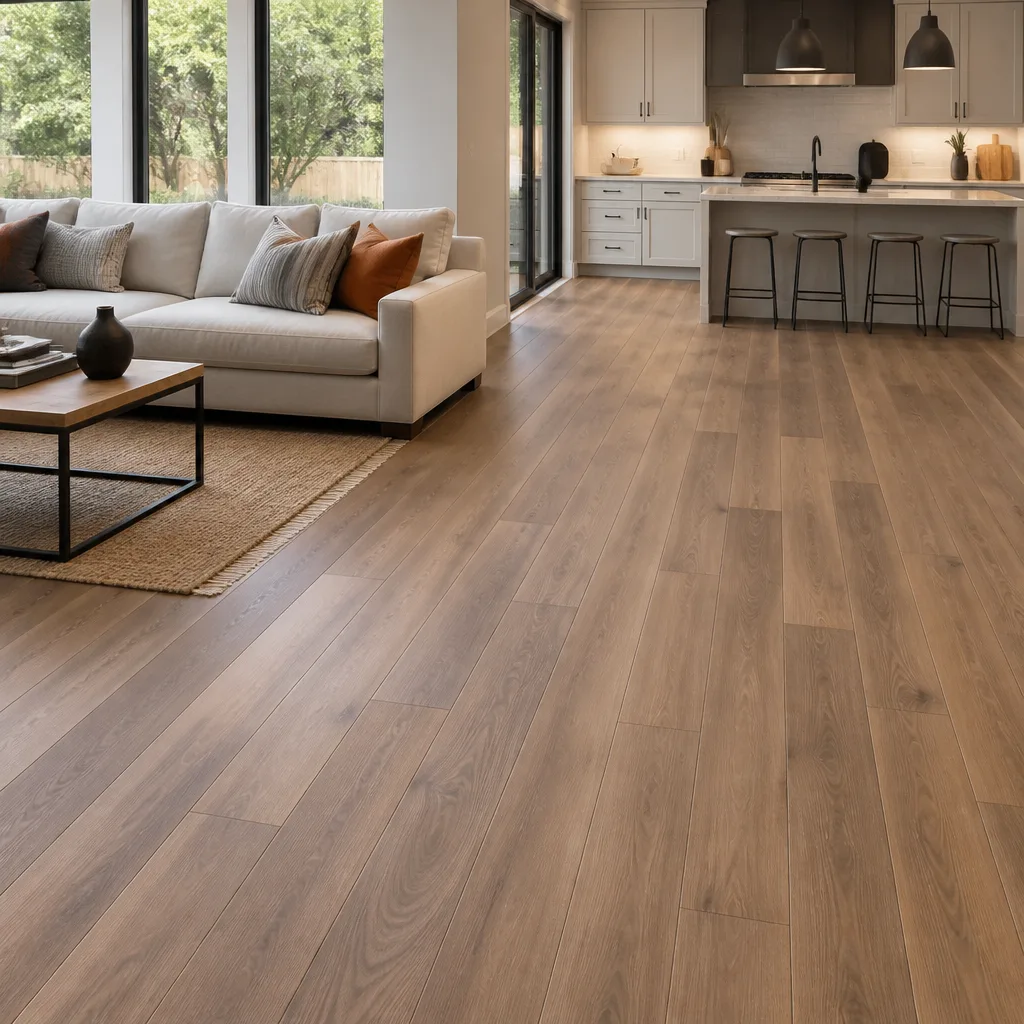 Laminate
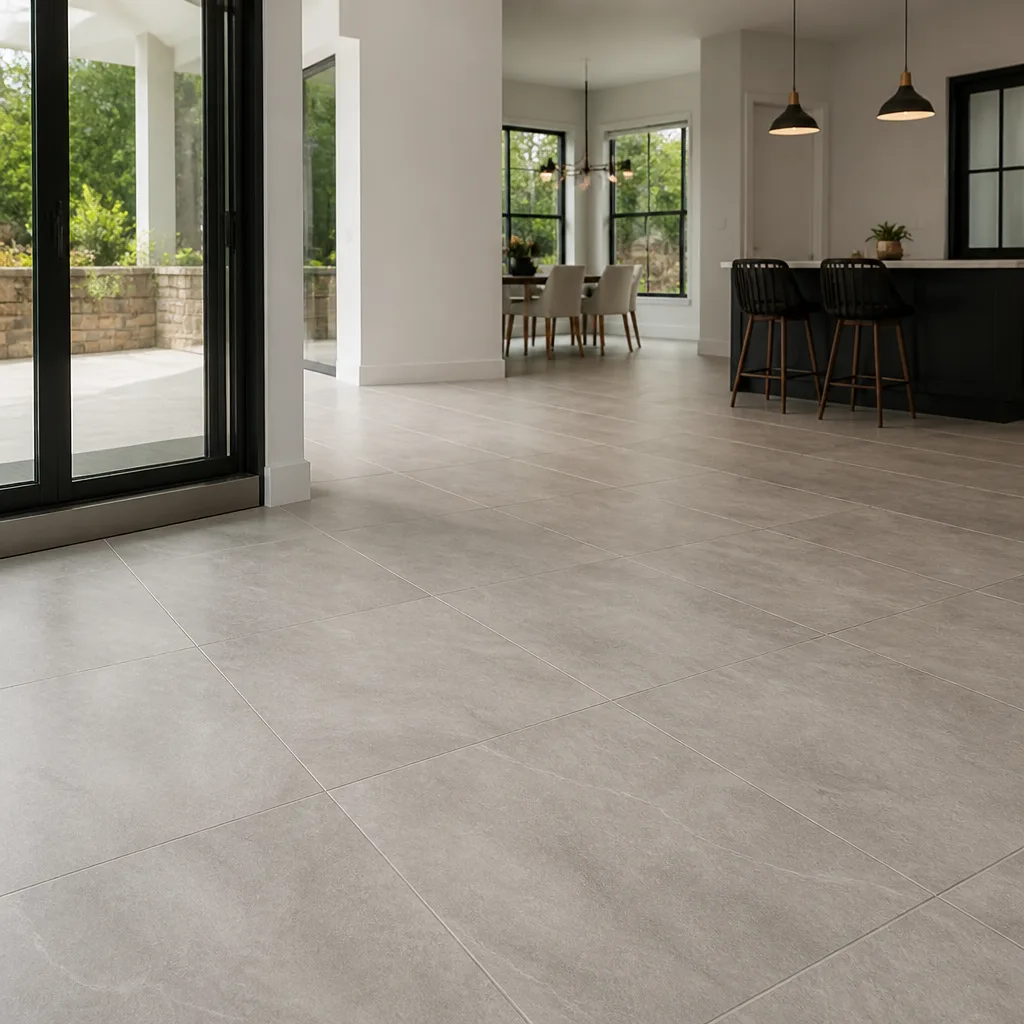 Porcelain tile
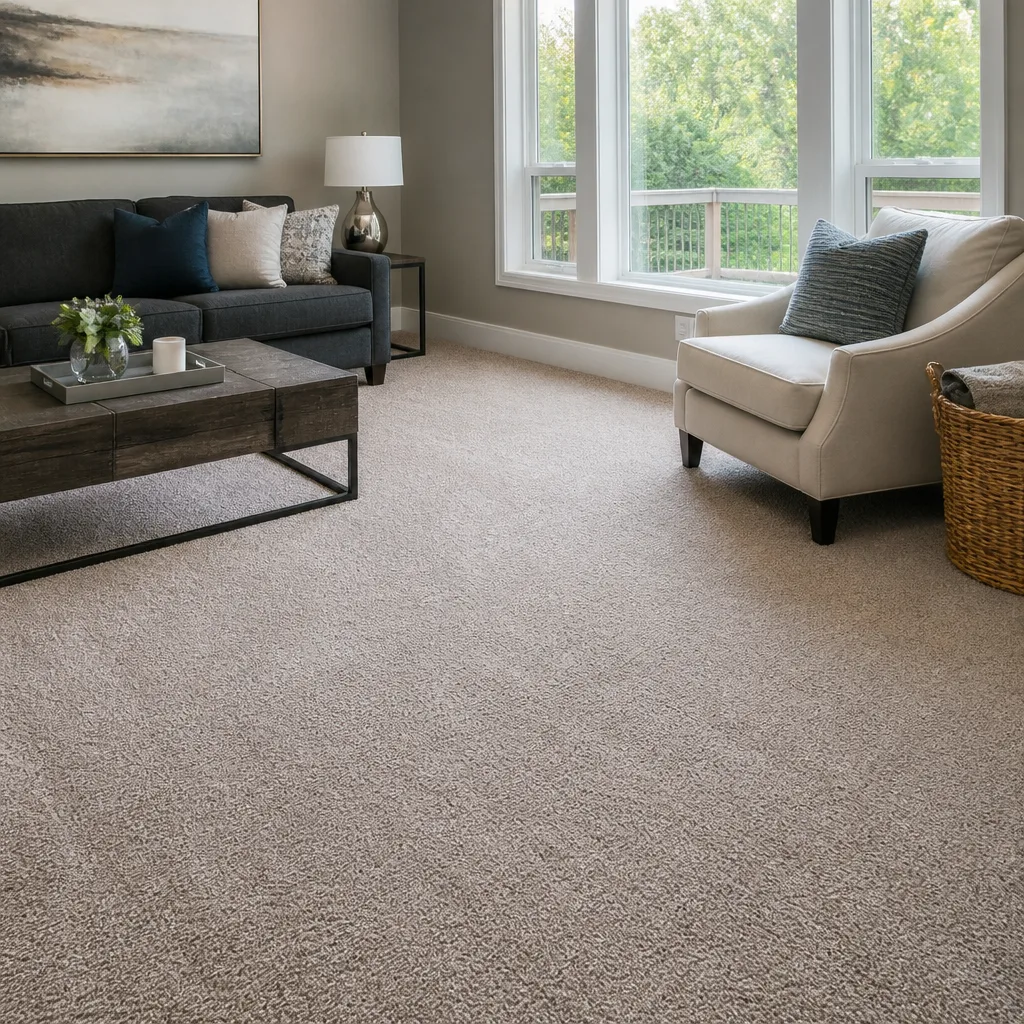 Carpet
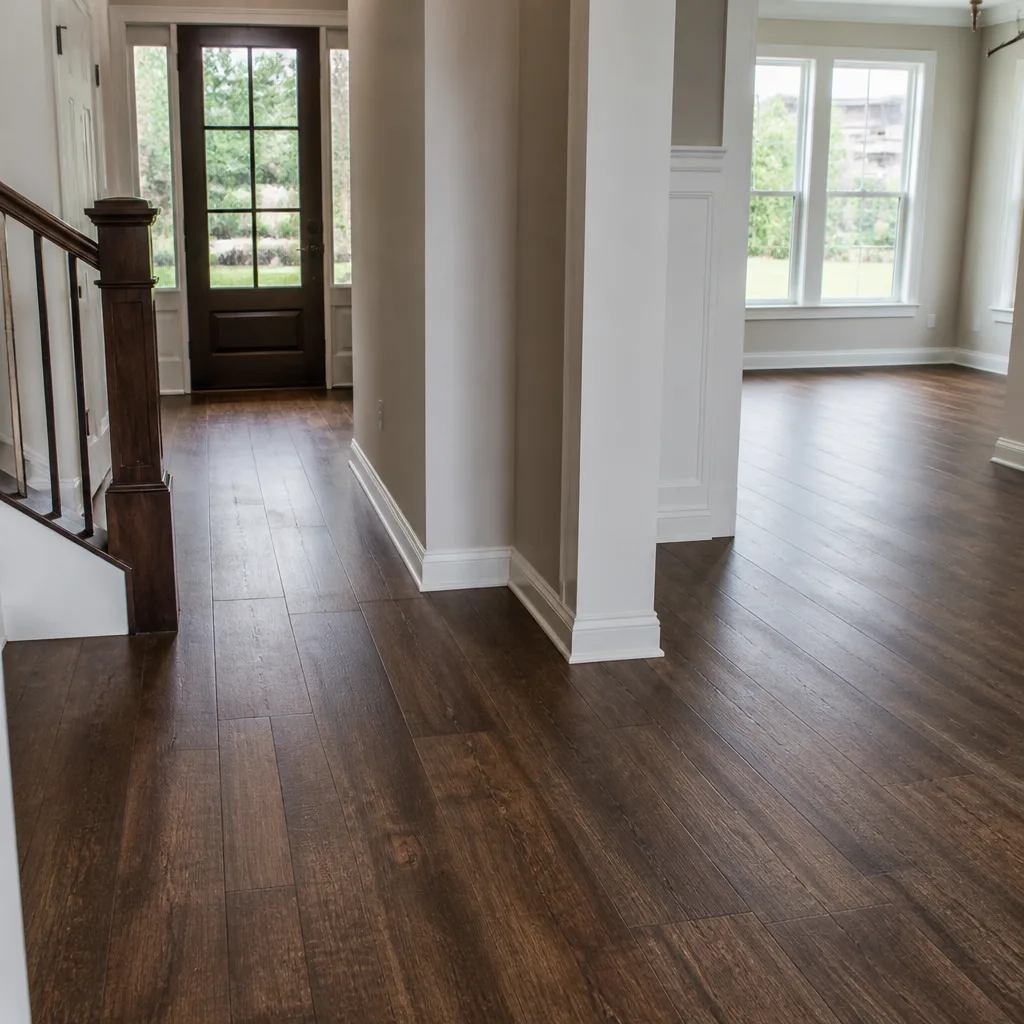 Shaw
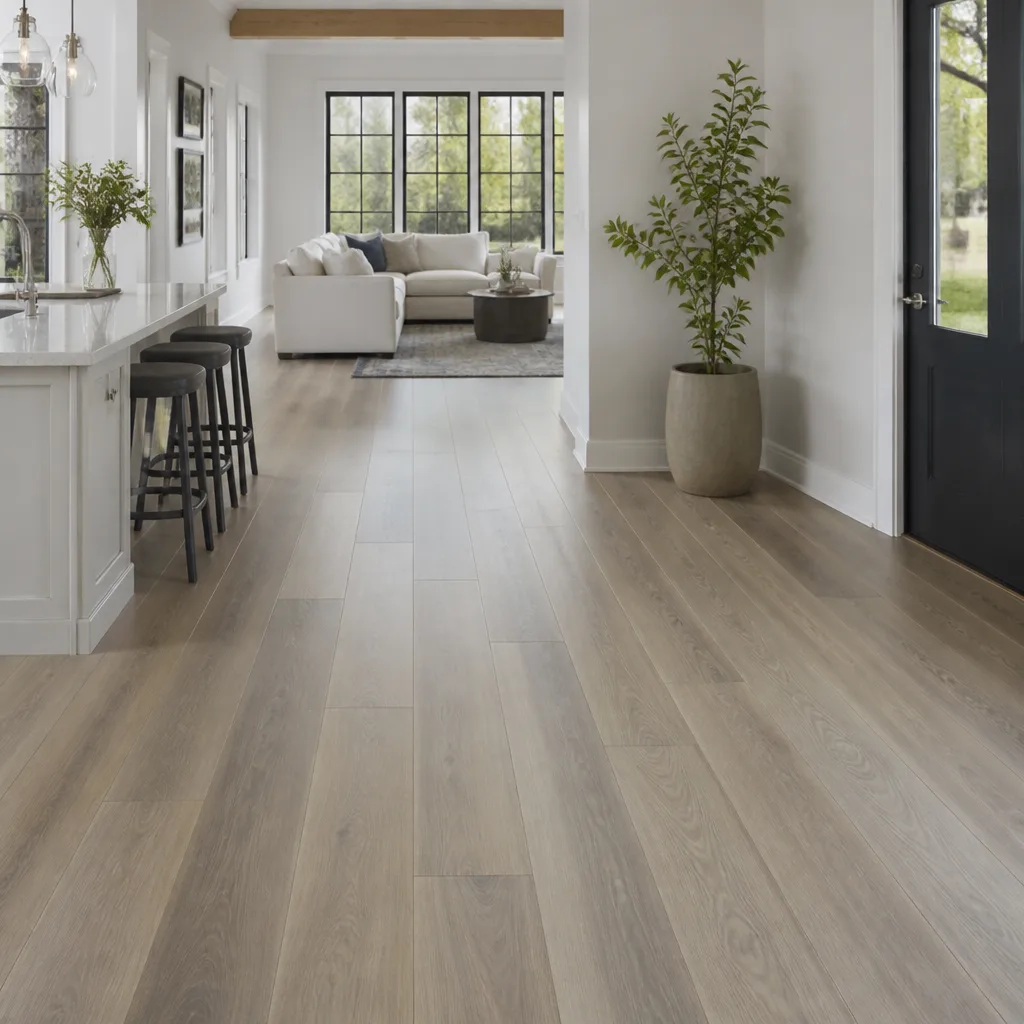 Mohawk
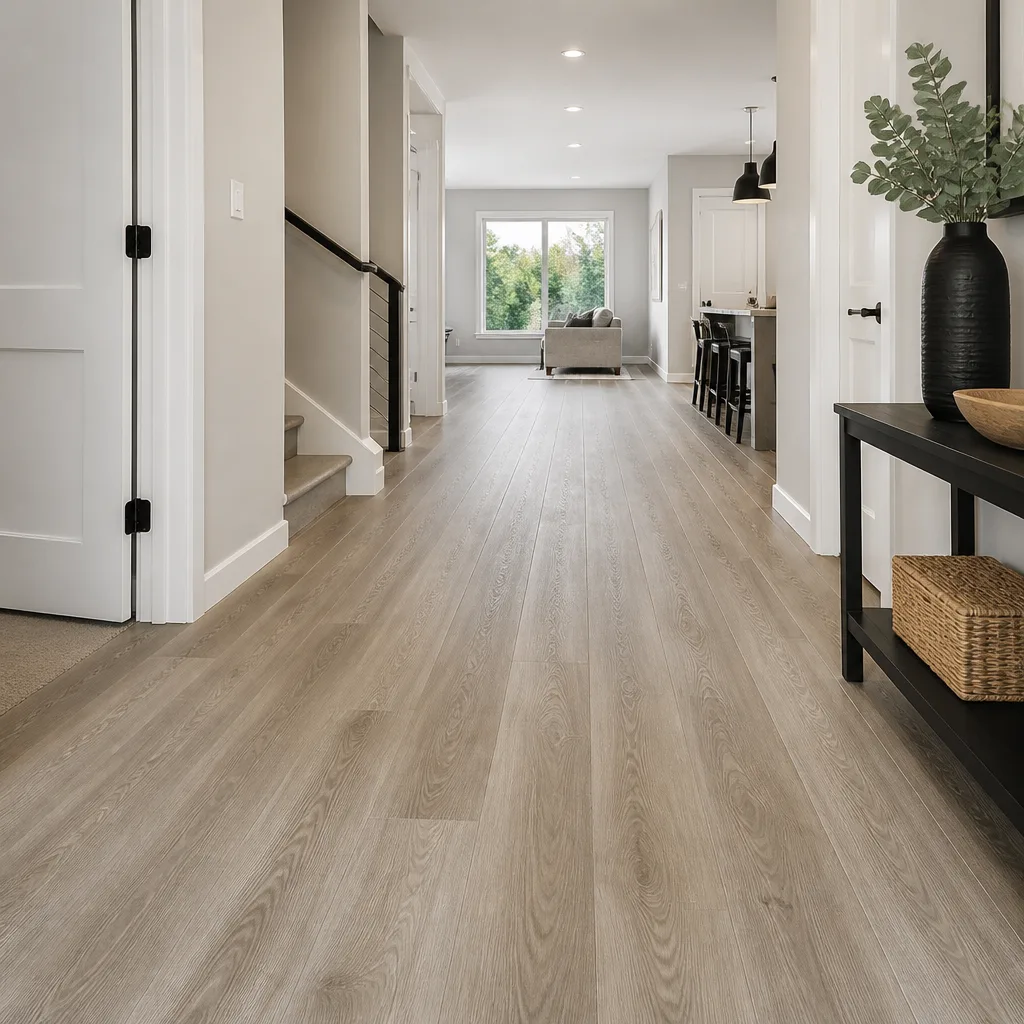 COREtec
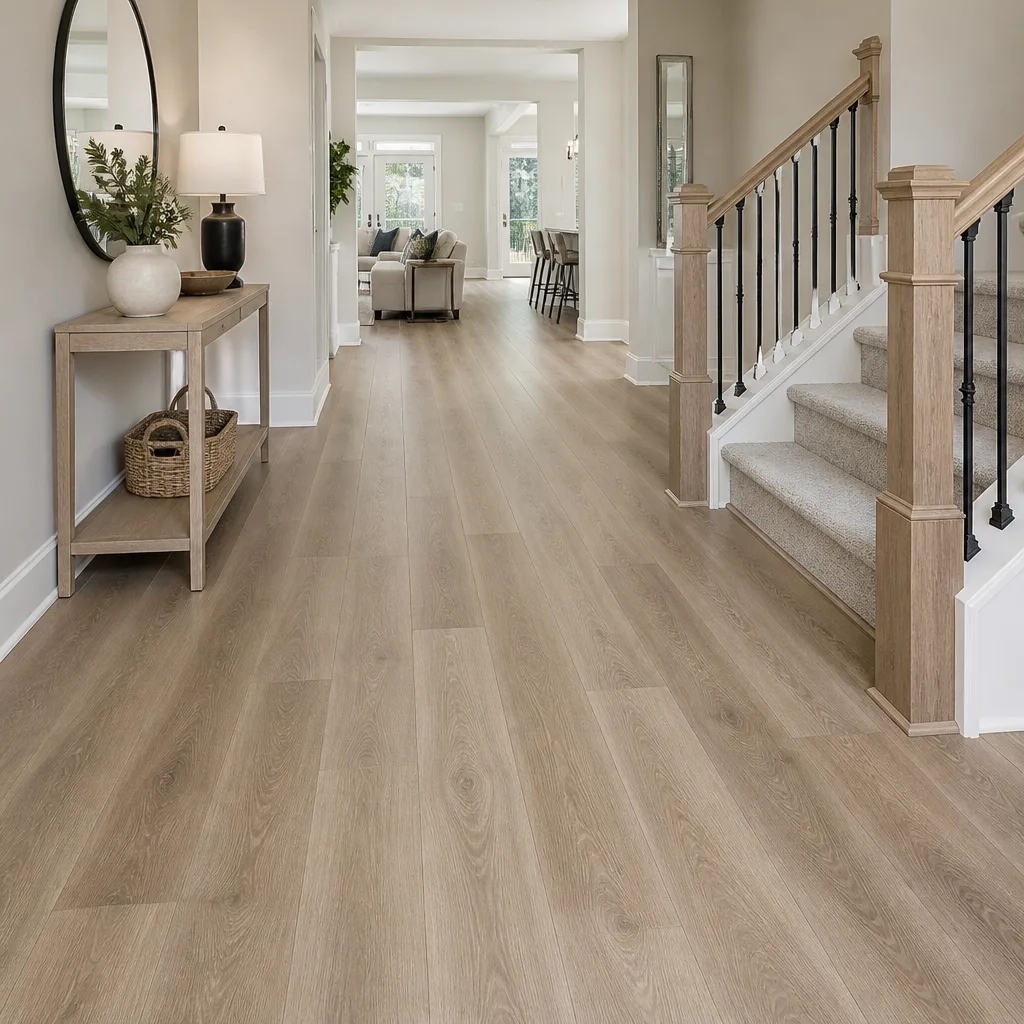 Pergo
Free in-home measure and written estimate: Shaw, Mohawk, COREtec and Pergo lines compared on your own rooms, with carpet, tile, vinyl plank, laminate and hardwood laid out side by side
Get your free estimateHardwood, Vinyl Plank, Laminate or Tile: How Henderson Homeowners Decide
Laminate has the worst track record in Henderson, and it has almost nothing to do with the laminate itself. It has to do with what’s under it. A laminate plank laid over a slab that was never properly tested for moisture will cup, buckle and sound hollow within a couple of seasons – not because the product is cheap, but because the conditions it was promised never existed. Tile forgives some of that. Solid hardwood fails differently. Vinyl plank hides it for a while and then telegraphs it through the seams. This guide scores all four materials against the conditions we actually find in Henderson homes, so the answer lines up with your slab, your sun exposure and your household.
Quick Answer
There’s no single best floor in Henderson – the right choice depends on your subfloor, how much direct sun the room gets, and who lives on it. In most Henderson homes, rigid-core luxury vinyl plank such as COREtec handles temperature swings and slab moisture best, tile wins on 20-year durability, engineered hardwood works well in conditioned rooms with stable humidity, and laminate only belongs on a properly tested slab with an AC4 rating or better. Start with the subfloor, then the room, then the budget – in that order.
Styles & brands we work with
- Hardwood
- Engineered hardwood
- Luxury vinyl plank
- Laminate
- Porcelain tile
- Carpet
- Shaw
- Mohawk
- COREtec
- Pergo
Table of Contents
- Start With the Subfloor, Not the Samples
- The Henderson Decision Matrix
- Why Rigid-Core Vinyl Handles Henderson’s Temperature Swings
- The Honest Case for Hardwood in Henderson
- Laminate’s Real Vulnerability: The AC Rating
- Tile’s Twenty-Year Cost Compared to the Rest
- Room-by-Room: Where Each Material Wins
- Common Mistakes to Avoid
- When to Call a Professional
Start With the Subfloor, Not the Samples
The most useful thing you can learn about your home before shopping for flooring is what’s underneath it. In Henderson, that usually means one of two things: a concrete slab poured on grade, or a wood subfloor over a crawlspace or a second story. Those two surfaces behave nothing alike, and the material that works on one can quietly fail on the other.
Slabs are the big one here. Concrete wicks moisture from the soil below, and in a desert climate that wicking is seasonal rather than constant – which makes it easy to miss. A slab that reads dry in February can carry measurable moisture in late summer. Before any flooring goes down, the installer should test the slab for moisture vapor emission. That’s a standard step, not an upsell, and any professional who skips it is guessing.
Wood subfloors have their own set of concerns. They flex, they move with humidity, and they can squeak or deflect if the joists are undersized or the sheathing is old. A floor that feels solid now can develop movement once a few hundred pounds of furniture and foot traffic settle in.
Here’s the order we recommend for any Henderson project:
- Identify the subfloor. Slab or wood, and what condition it’s in.
- Test for moisture. Concrete needs a vapor emission test; wood needs a moisture reading against the flooring’s requirement.
- Check flatness and soundness. Highs, lows, deflection and squeaks all get addressed before flooring.
- Note sun exposure. Which rooms get direct afternoon light and for how long.
- Then pick the material. Not before.
We’ve walked into plenty of Henderson homes where the homeowner had already picked a floor and the subfloor ruled it out. Better to find that out at the estimate than after the boxes are open. If you’re weighing this decision across a whole house, our flooring installation Henderson page walks through the installation side in more detail.
The Henderson Decision Matrix
This is the part most buying guides skip. Instead of ranking the four materials on a universal scale, here’s how they actually sort out once you factor in Henderson’s real conditions – slab versus wood subfloor, strong sun, pets and kids, and budget.
Slab subfloor. Rigid-core vinyl plank and ceramic or porcelain tile are the two safest choices on a slab, provided the slab is tested and flat. Engineered hardwood can work on a slab with a proper moisture barrier and a conditioned interior. Solid hardwood on a slab is a specialized job and often not worth the risk. Laminate is the most vulnerable on a slab unless the moisture test and the AC rating both come back strong.
Wood subfloor. This opens up the field. Solid hardwood becomes realistic and is the classic choice upstairs. Laminate performs well here because the wood subfloor is forgiving. Vinyl plank and tile both work with the right underlayment.
High sun exposure. Rooms that take direct afternoon light through big west-facing windows are the toughest on any floor. Tile shrugs it off. Vinyl plank handles it if the product is rated for it. Hardwood will fade or shift in color under sustained UV – that’s normal and expected with wood. Laminate can fade too, and heat near a glass door can stress the seams. Window coverings help across the board.
Pets and kids. Rigid-core vinyl and tile are the most forgiving of claws, spills and dropped objects. Laminate is decent but seam gaps are where it loses. Hardwood scratches and dents – it can be refinished to erase a lot of that, but refinishing isn’t a frequent-cycle fix.
Budget. Laminate and mid-tier vinyl plank typically land lowest up front. Tile costs more to install because of the setting work. Hardwood costs the most to install but has the longest refinishing life if the wood is thick enough. Engineered hardwood sits in the middle on cost with a shorter refinishing life than solid.
No matrix replaces a real look at your home. These combinations point to the right shortlist, not the final pick.
Why Rigid-Core Vinyl Handles Henderson’s Temperature Swings
Henderson runs hot in summer and cool in winter, and indoor temperatures swing with the AC cycle. That matters more for vinyl plank than most buyers realize, and it’s the reason rigid-core luxury vinyl plank such as COREtec or Karndean outlasts standard WPC vinyl in this climate.
The difference is the core. Standard WPC (wood-plastic composite) vinyl has a softer, more flexible core that expands and contracts more with temperature change. Rigid-core LVP uses a denser, stiffer core – usually a stone-plastic composite – with a much lower expansion coefficient. In practice that means the plank moves less across a room, the seams stay tighter, and a whole-floor install can often go down without the expansion gaps that softer vinyl needs around the perimeter.
Why does that matter more in Henderson than in a milder climate? Because the AC cycle creates bigger indoor temperature swings than people expect. A room can swing a dozen degrees over a day as the system cycles on and off, and the plank at the edge of a sun-exposed wall feels it most. Over a couple of seasons, a softer vinyl can telegraph the slab underneath – ridges, high spots and joint shadows show through the wear layer. Rigid-core resists that better.
The brands we install that fit this picture well include COREtec and Karndean, alongside Mannington. Those lines carry both a realistic wood look and, in Karndean’s case, a handcrafted look that reads more like stone or hand-finished wood. That’s the honest reason to choose one over the other – realism and room character, not a claim that one is objectively better.
A few things rigid-core vinyl won’t fix. It’s water-resistant, not waterproof, and standing water or moisture rising from a slab still has to be dealt with before installation. It’s not scratch-proof and it doesn’t last forever. And the slab still gets tested. Rigid-core handles temperature swing better than softer vinyl, not a wet slab.
The Honest Case for Hardwood in Henderson
Solid hardwood can work beautifully in a Henderson home – but only under specific conditions. We’re not going to pretend it’s a universal favorite here, because it isn’t. The rooms where it lives up to its reputation are conditioned interiors with stable humidity, not spaces that swing wet to dry with the seasons.
What “stable humidity” means in practice: the HVAC runs year-round, the interior stays in a relatively narrow range, and the room isn’t a space that opens directly to the outdoors or sits over an unconditioned slab without a moisture barrier. Rooms that fail that test are where solid hardwood struggles. Engineered hardwood, which has a plywood core with a real wood top layer, handles humidity variation better than solid and is the more practical choice for most Henderson installations.
Species matters too. White oak is the most reliable choice for this climate – it’s dense, dimensionally stable, and its grain pattern hides minor movement far better than maple or hickory. Ask specifically for white oak if the goal is a floor that settles quietly into a Henderson home.
Acclimation is the step installations skip when they go wrong. The floor has to sit in the room where it will be installed, in the conditioned space, until the wood’s moisture content matches the room’s equilibrium. The length of time depends on the product and the home – the manufacturer’s instructions set it, not a rule of thumb. That means:
- Bring the wood into the room early. Not the garage, not the hallway – the actual room.
- Get the HVAC running. The room should be at normal living conditions before the wood arrives.
- Measure moisture content on arrival and again before install. The wood and the subfloor need to be within the product’s acceptable range.
- Hold the install until both readings agree. This is the step that gets rushed and shouldn’t be.
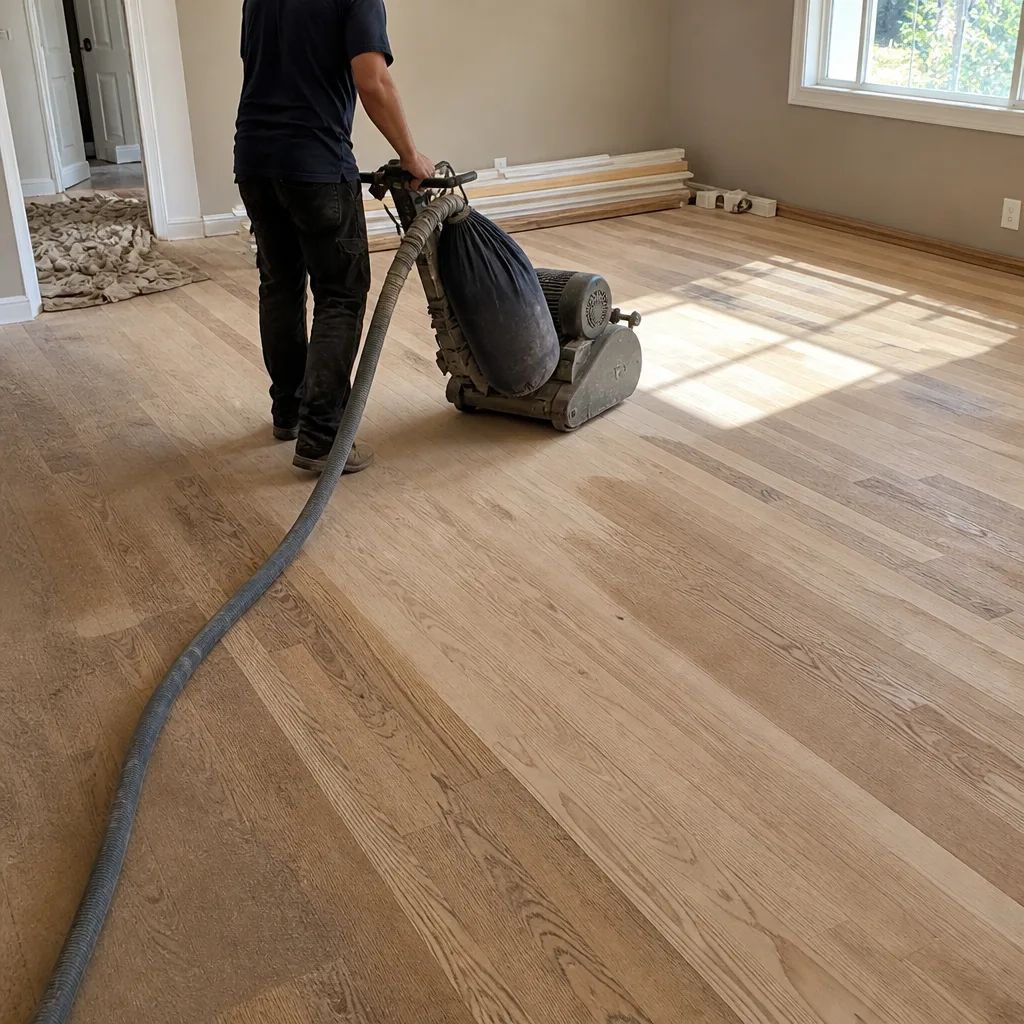
Refinishing is the hardwood advantage nobody else offers. A solid or thick-top engineered floor can be sanded and refinished to erase years of scratches and wear – checked at the estimate visit, because it depends on the thickness of the wood and its condition. That’s a floor that can be renewed rather than replaced, which is a very different long-game than most products offer. We handle hardwood refinishing directly; it’s the part of the job most generalist contractors skip.
Laminate’s Real Vulnerability: The AC Rating
Laminate gets a bad rap in Henderson, and the reason is almost always installation against a slab that wasn’t tested. The product itself is fine – the failure mode is moisture and wear, and both are things you can plan around.
The single most useful number on a laminate box is the AC rating. It’s an industry measure of how much foot traffic and abrasion a laminate floor is designed to handle:
- AC1 – light residential, bedrooms only.
- AC2 – moderate residential, living rooms and dining rooms.
- AC3 – heavy residential, hallways and family rooms.
- AC4 – heavy residential and light commercial.
- AC5 – commercial-grade.
For a slab install in Henderson, we treat AC4 as the minimum. A floor laid over a concrete slab always carries more moisture risk than one on a wood subfloor, and an AC4 laminate simply has more wear layer and a stronger core to handle movement before it fails visibly. AC3 laminate can work in a bedroom over a tested, well-prepped slab – but the margin for error is smaller, and the consequences of missing it are higher.
Two more things that matter for Henderson laminate. First, the moisture test needs to happen before the install, not after. A vapor barrier under the laminate is a step, not a substitute, for that test. Second, laminate can fade under direct sun. Rooms getting strong afternoon light through west-facing windows need window coverings or a product with a UV-resistant wear layer. Laminate is also not waterproof – it’s water-resistant, and standing water from a spill left over a seam will swell the core. Wipe up quickly and it holds up fine.
A few laminate brands we install include Pergo and Armstrong, both of which offer budget-friendly to premium lines within their range. That’s useful if the room shape fits laminate and the budget needs to stay tight – but the AC rating and the moisture test are non-negotiable first.
Tile’s Twenty-Year Cost Compared to the Rest
Tile costs more to install than the other three materials, and it can still be the cheapest floor you buy over twenty years. The reason is what doesn’t happen to it: it doesn’t need refinishing, and it doesn’t get torn out and replaced the way a cheaper floor does.
Here’s how the four options compare on a twenty-year runway in a Henderson home – not a price quote, but the shape of the cost:
- Tile: highest install upfront. No refinishing cycle. Replacement of individual cracked tiles is possible, though it’s a specialist job. Twenty-year cost is close to the install cost, with almost no maintenance cycle.
- Hardwood: high materials and install. Refinishing cycle typically one to two times over twenty years for a solid or thick-top engineered floor – depends on wear and the wood’s thickness. Cost trending upward with each refinish, not down.
- Rigid-core vinyl plank: mid-range install. No refinishing cycle. The wear layer reaches its limit eventually, and the plank is replaced rather than rejuvenated. Realistic replacement cycle in a busy household over twenty years.
- Laminate: lowest install upfront when done right. No refinishing. Replacement cycle similar to vinyl plank, shorter if the install was thin on moisture control.
Two things tilt this further toward tile. First, tile’s per-square-foot material cost varies hugely by Daltile line – basic porcelain and premium stone-look tile sit in very different places. Second, the install cost is mostly labor, so a smaller bathroom or entry is where tile’s total cost gets most manageable. Tile flooring installation carries more labor per square foot for setting and grouting, but the number doesn’t come back in five years.
Tile also handles the two things Henderson floors face most: strong sunlight and temperature swing. A porcelain or ceramic tile will go twenty years without refinishing or replacement in a normal household, which is why we reach for it in entries, kitchens and bathrooms.
Room-by-Room: Where Each Material Wins
Once the subfloor and ceiling conditions are clear, the room itself becomes the deciding factor. Here’s how the four materials sort out room by room in a typical Henderson home.
Kitchen. Tile takes it. Water, spills and dropped objects are everyday events, and porcelain or ceramic handles all three without a wear cycle. Rigid-core vinyl is the runner-up if budget is tighter.
Bathroom. Tile only – this is one of the few rooms where the decision makes itself. Even water-resistant vinyl plank isn’t the right call where the floor regularly gets wet.
Living room. Depends on sun and lifestyle. Big west-facing windows and pets point to tile or rigid-core vinyl. A conditioned, shade-controlled room opens up hardwood or engineered hardwood as the room it’s designed for.
Bedrooms. Softer and more forgiving. Laminate in AC3 or AC4, or engineered hardwood, both work well here. Carpet is worth considering too if the room is upstairs and quiet matters – see our carpet installation page for the specifics.
Entry and hallway. Highest traffic in the house. Rigid-core vinyl plank or tile. Laminate only at AC4 or above, and hardwood is a compromise – it will show wear here early.
Rental property. Durability to footprint matters more than warmth. Rigid-core vinyl plank tends to be the sweet spot for turnover cost and damage tolerance, with tile in wet areas. Laminate can work but a bad slab install is a tenant complaint waiting to happen. For an overview of Henderson installation work across property types, that page covers the local side.
If tile is in the running for any of these rooms, our tile flooring installation page goes deeper on setting methods and grout choices.
Common Mistakes to Avoid
- Skipping the slab moisture test. In Henderson’s seasonal wet-dry cycle, a slab that reads dry in one season can fail a floor in another. Test it before any material goes down – not after the boxes are open.
- Buying laminate without checking the AC rating. A beautiful-looking laminate at AC2 over a slab is a future problem. AC4 is the minimum for a slab install.
- Choosing solid hardwood for a space with unstable humidity. A sunroom or a room that opens directly outdoors will move solid hardwood in ways it can’t move back. Engineered hardwood is the safer choice there.
- Rushing the acclimation window. Wood that hasn’t settled to the room’s moisture content will gap and cup after install. The product instructions set the time – respect them.
- Putting rigid-core vinyl over a slab that wasn’t prepped flat. Rigid-core handles temperature better than softer vinyl, but a high spot or low spot will still telegraph through the plank.
- Assuming tile is only a bathroom material. It’s the best 20-year cost in the house for a high-traffic kitchen or entry. It’s not a budget compromise – it’s a cost-per-year win.
- Picking the material from the sample board alone. Samples don’t show how a floor handles slab moisture, sun exposure or a 4-year-old with a juice cup. Pick the material after the subfloor is understood, not before.
When to Call a Professional
Some jobs need a pro, and it’s worth knowing which ones before you start. Hardwood refinishing is the clearest case – sanding, stain matching and finish chemistry are separate skills from installation, and a bad refinish is very hard to undo. Slab moisture testing before any install is another: a professional test tells you whether the floor you want will last, and that’s information you need at the estimate, not after. Engineered or solid hardwood installation, tile setting over any questionable subfloor, and any full-house installation all fall into the same category. A bad slab prep doesn’t show up on install day – it shows up a season later.
We install carpet, tile and hardwood, and we handle hardwood refinishing. We don’t do general remodeling, plumbing, electrical or anything outside those four. Our technicians have up to 9 years of experience, and every project runs from one point of contact from product selection through the install – no handoff to a subcontracted crew. If you’re in Henderson and the decision is stuck, call (888) 721-9818 for a free estimate. We’ll test the subfloor, walk the rooms, and put a written price in front of you.
See the difference
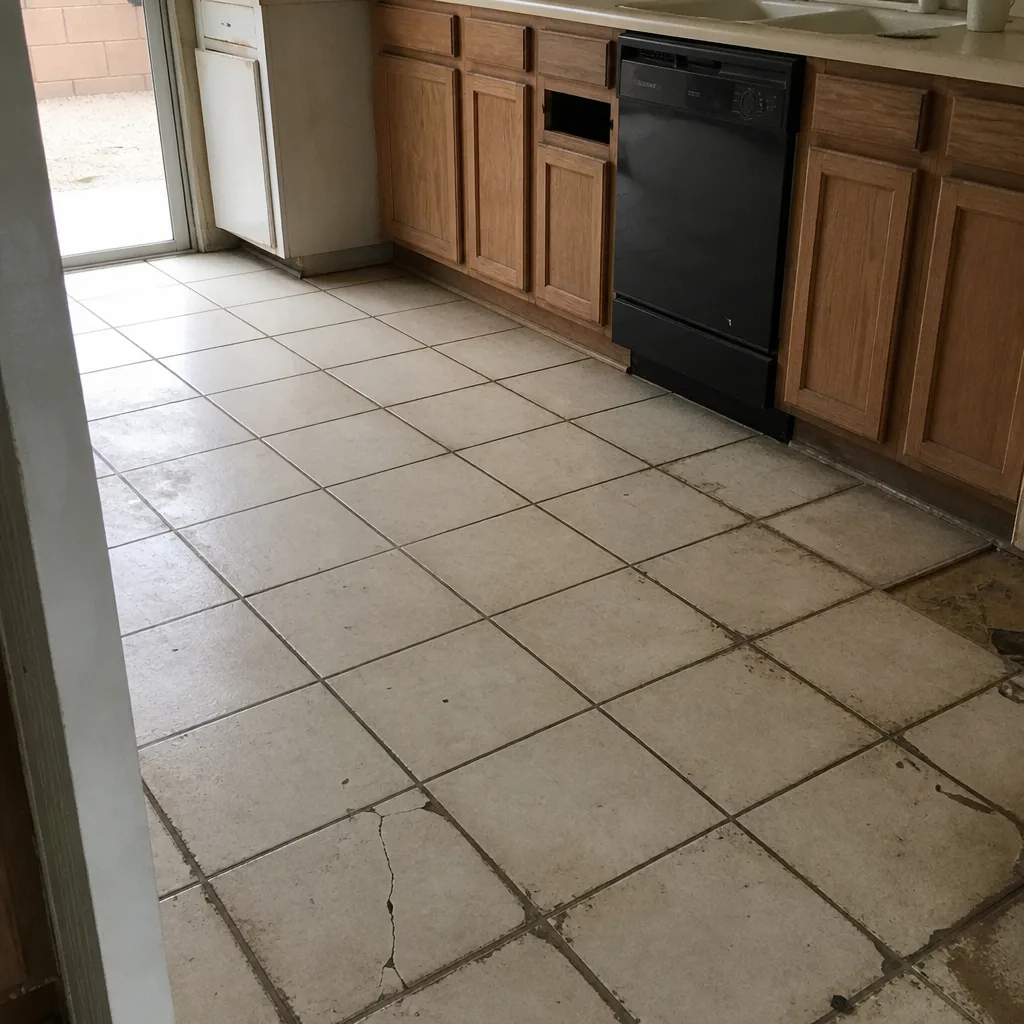 Before
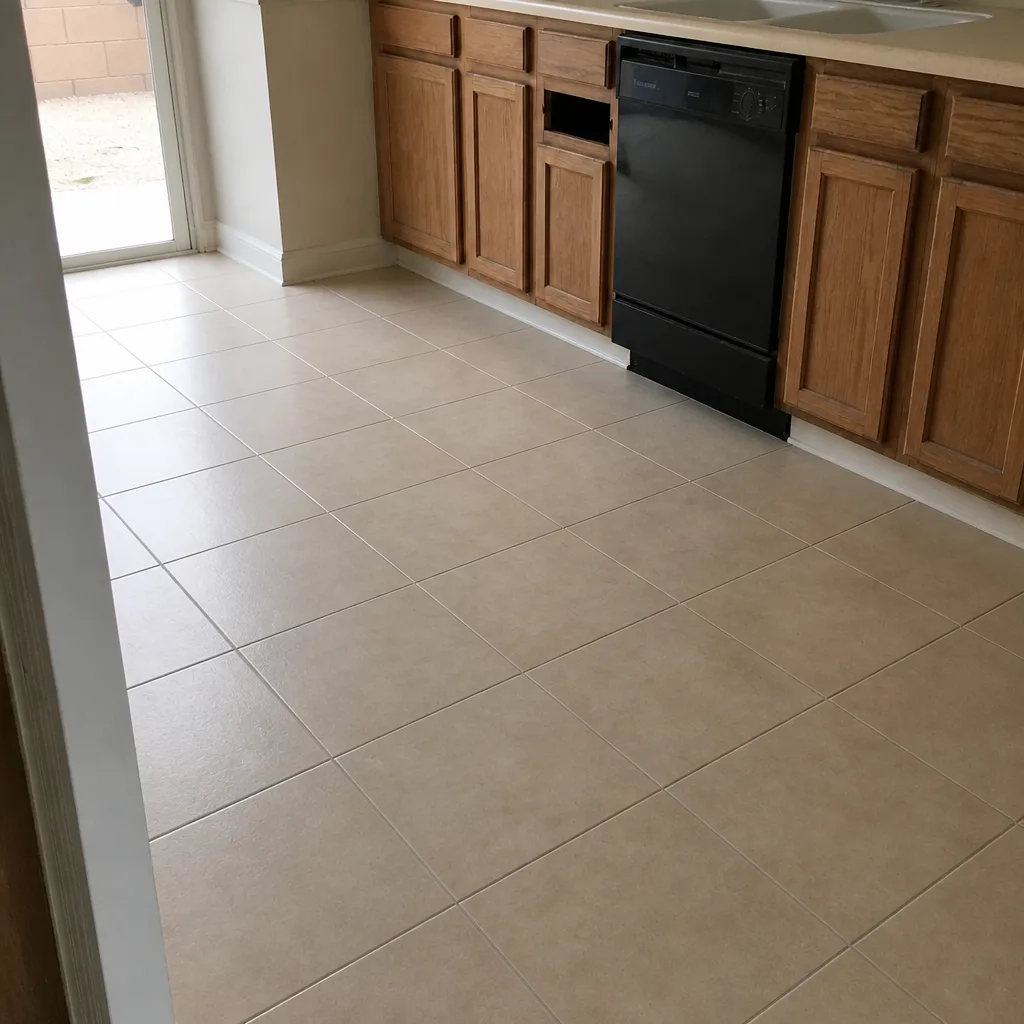 After
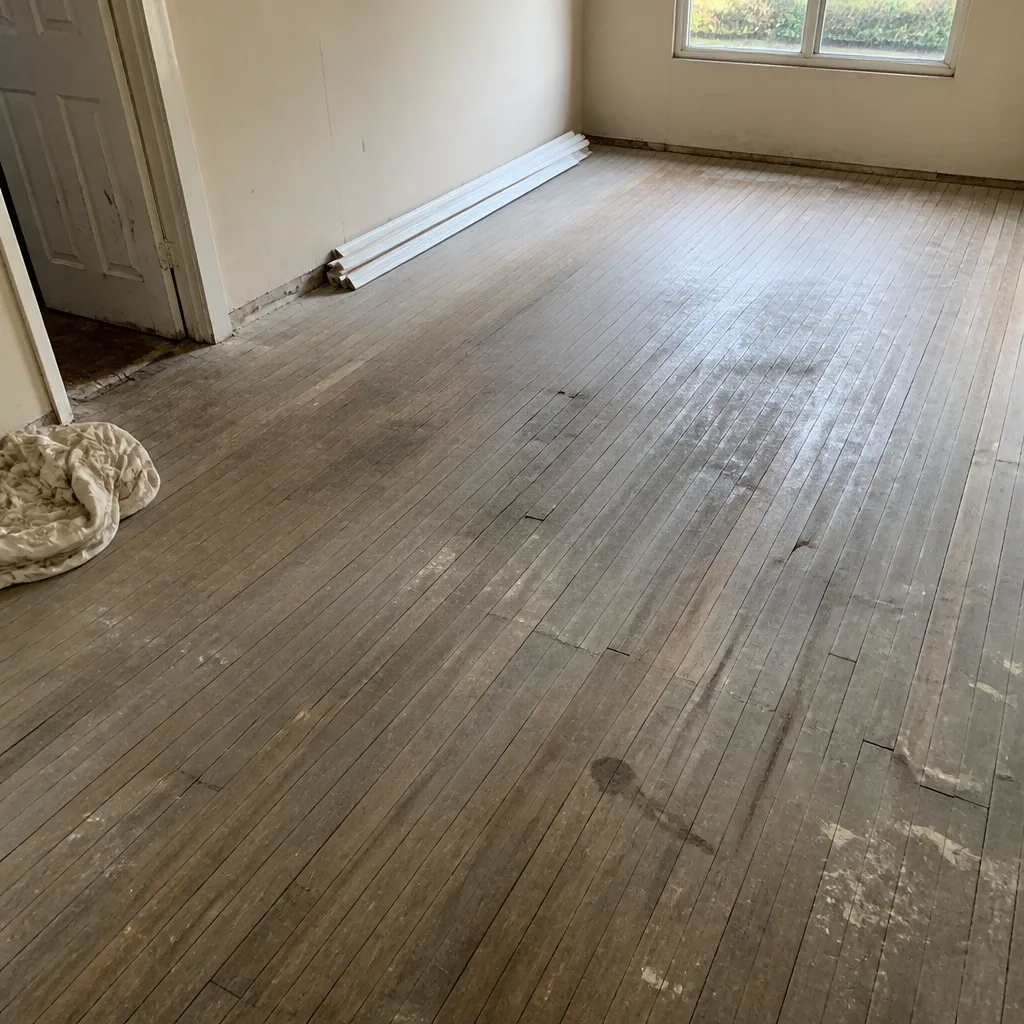 Before
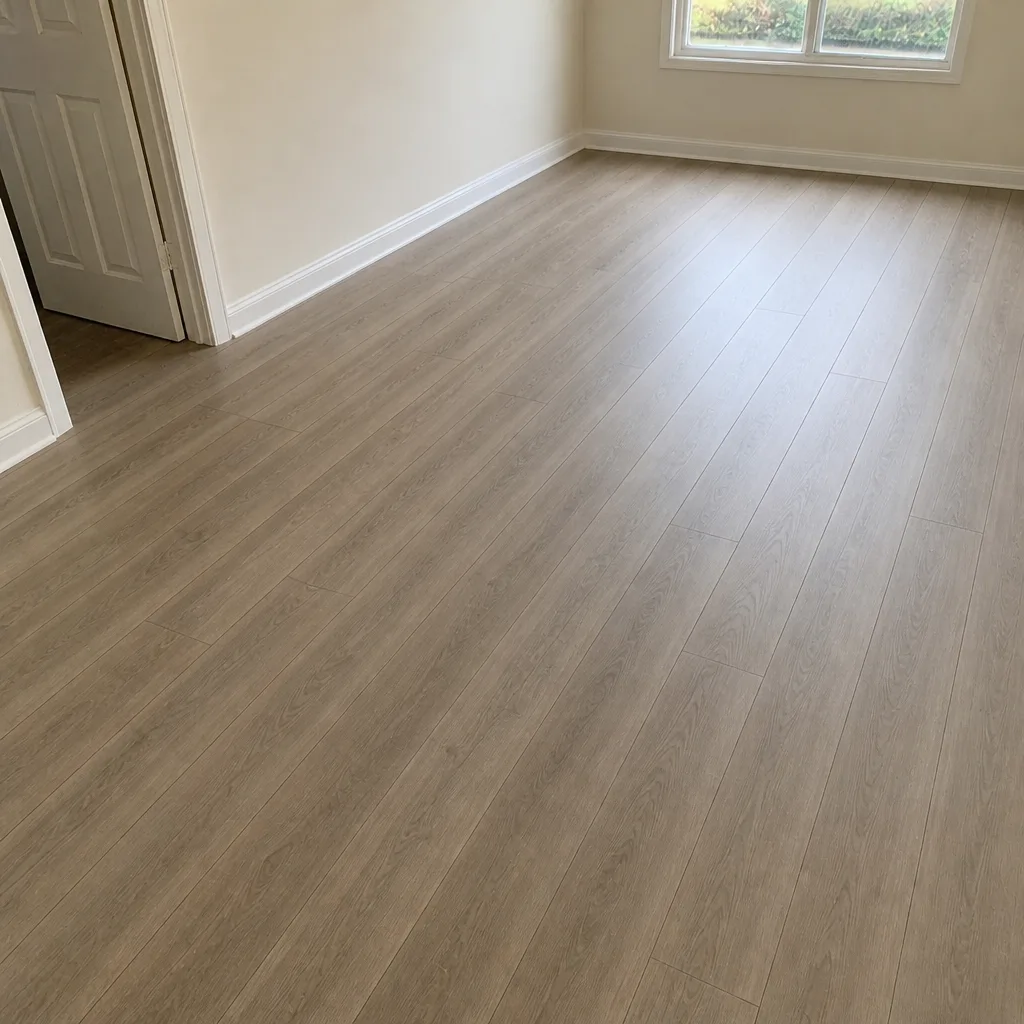 After
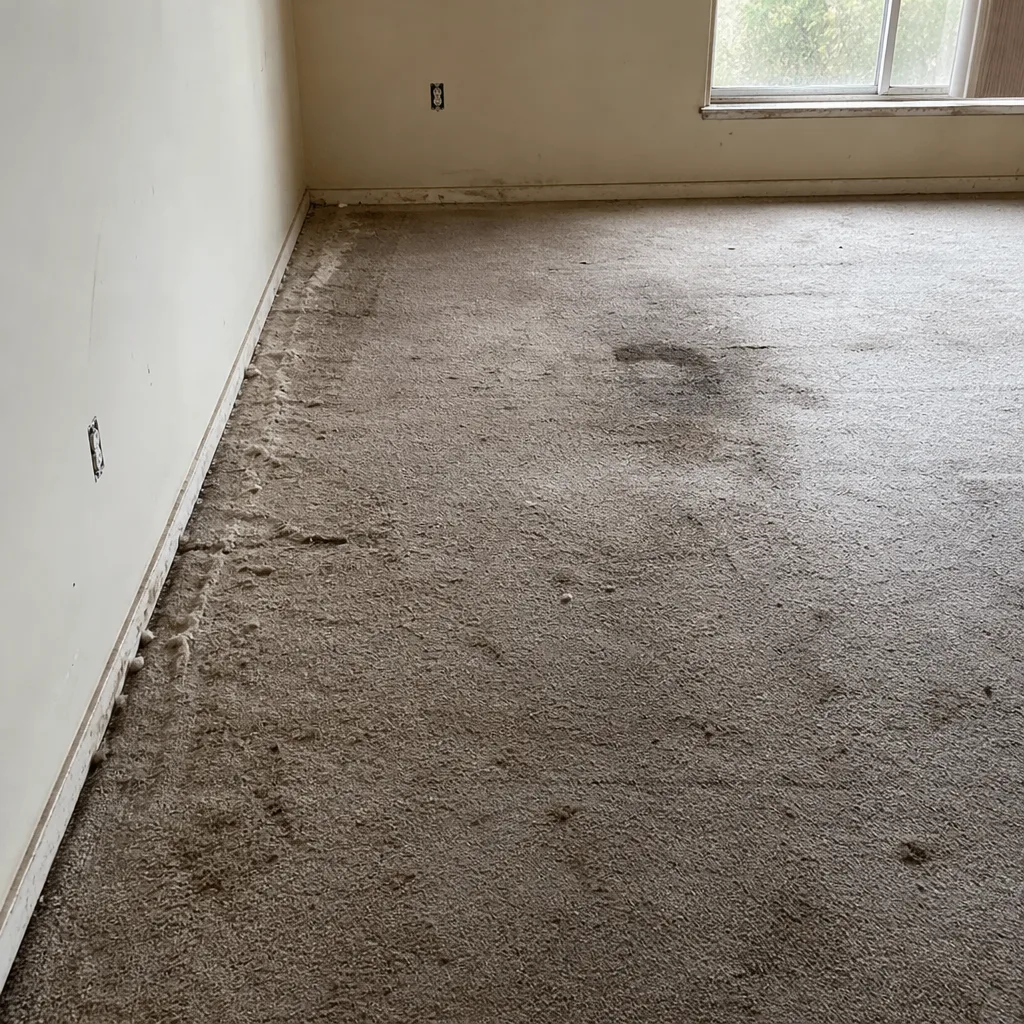 Before
 After
Frequently Asked Questions
For most Henderson homes, rigid-core luxury vinyl plank is the more forgiving choice, especially over a concrete slab. It handles temperature swings better, is water-resistant rather than water-sensitive, and won’t swell at seams the way laminate can. Laminate can absolutely work – it just needs a moisture-tested slab and an AC4 rating. Call (888) 721-9818 for an exact quote – estimates are free.
It’s possible but usually not the best call. Solid hardwood over a slab needs a specialized installation method, a moisture barrier and a conditioned interior to hold up. Engineered hardwood is the more practical choice on a slab, and rigid-core vinyl or tile are the safest routes. The subfloor check at the estimate visit settles it. Call (888) 721-9818 to schedule one.
Pricing is per job and set by a written estimate after a free in-home measure. Laminate and mid-tier vinyl plank sit at the lower end of the typical range, engineered hardwood and tile at the middle to upper, and solid hardwood with refinishing at the top. The written estimate is the final number – call (888) 721-9818 for yours.
AC4 is the minimum for any laminate install over a concrete slab in Henderson. AC4 gives the wear layer and core strength to handle movement before it fails visibly. AC3 can work in a bedroom over a tested, well-prepped slab – but the margin for error is smaller. Call (888) 721-9818 and we’ll talk through the room.
Yes – hardwood has to acclimate in the room where it will be installed, at normal living conditions, until its moisture content matches the room. The length of time depends on the product and the home; the manufacturer’s instructions set it. Rushing this is the most common reason a new hardwood floor gaps or cups. Call (888) 721-9818 with your product and we’ll walk through the timing.
It depends on the material, the square footage and the subfloor prep – the estimate visit sets the schedule and you get a booked install day. Tile carries more labor per square foot than vinyl plank, and a full-house job is obviously longer than a single room. We don’t promise a fixed install length before the measure. Call (888) 721-9818 to book your free estimate.
The Bottom Line
The right floor in Henderson is decided by the subfloor first, the room second and the budget third. Rigid-core vinyl plank like COREtec or Karndean handles the temperature swings best in most rooms. Tile is the 20-year cost winner in kitchens, bathrooms and entries. Engineered hardwood in a species like white oak works well in conditioned interiors with stable humidity – and solid hardwood can be refinished to extend its life where the wood is thick enough. Laminate belongs on a tested slab with an AC4 rating or better. Nine trusted brands, one installation team – call (888) 721-9818 for a free estimate.
We answer 24/7. Fast dispatch from 7am to 7pm, Sunday through Friday.
Written by the team at Flooring Installation Henderson.